
Gun+Car+Ball Games Sweep India; Real Money Games with its Downward Trend
SocialPeta's 2022 analysis looks at India's fast-growing mobile game market, the popularity of simulation, action, sports and casual titles, and the marketing strategies behind Ludo Supreme Gold, BATTLEGROUNDS MOBILE INDIA and Food Cutting.
India's Fast-Growing Mobile Game Market
Data at the time showed that the growth rate of India's game market was among the highest in Asia and the world.
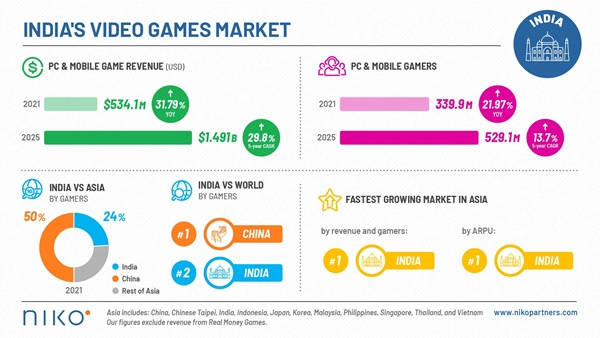
As a populous country, India had around 0.9 billion young and high-quality internet users among a total population of 1.4 billion. Although its game market was worth only 136 billion rupees, or about US$1.8 billion, India had already grown into one of the world's major game markets.
As a result, many game companies began researching the preferences of Indian players and looking for deeper market insights in an effort to capture a larger share of this emerging opportunity.
SocialPeta Research analyzed the top 100 games by downloads and revenue in India and produced a breakdown of the country's most popular mobile game genres.
Popular Mobile Game Genres in India: Simulation, Action and Sports
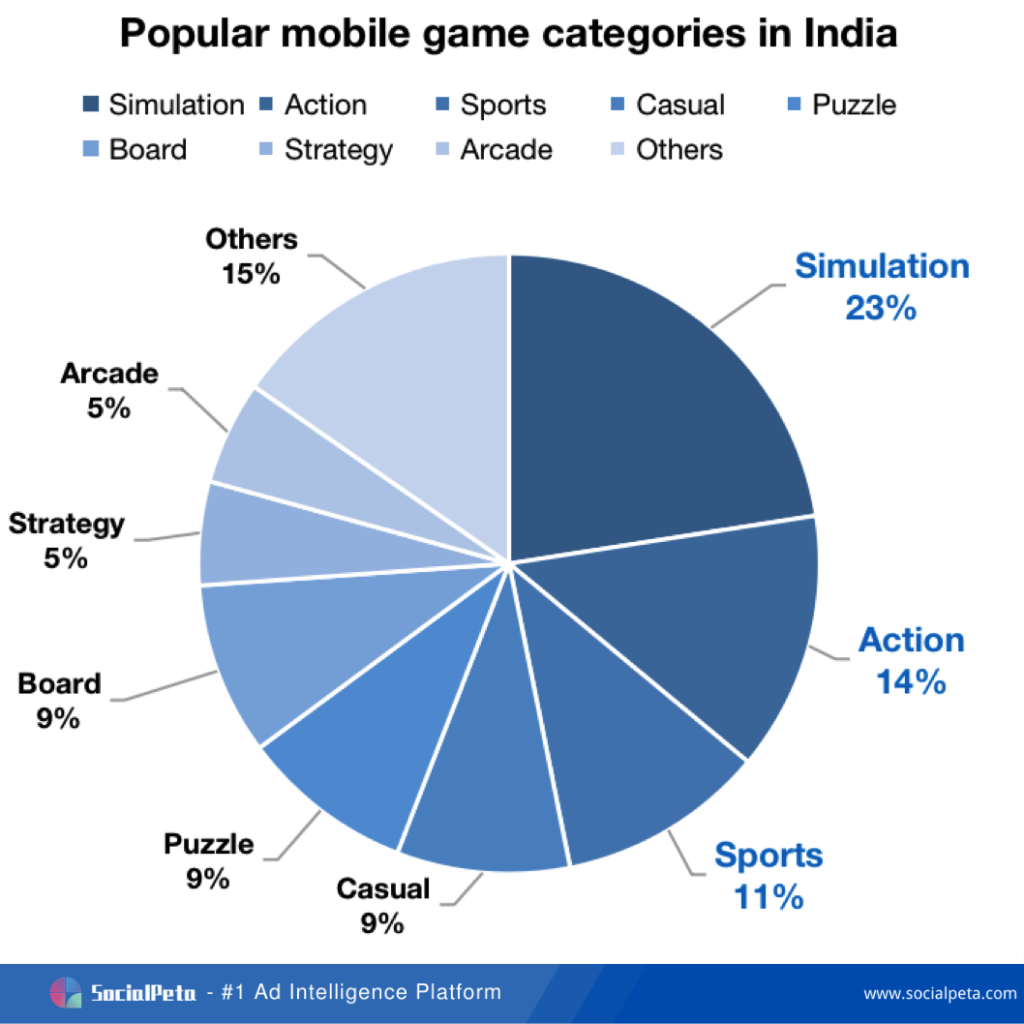
Simulation, action and sports were the three most popular game genres in India. In particular, car-themed simulation games were performing strongly. Two car-themed simulation games appeared among India's top 10 games by downloads in February 2022.
Shooter games had also become representative of the wider action category, while battle royale shooters remained among the country's most downloaded games for several months.
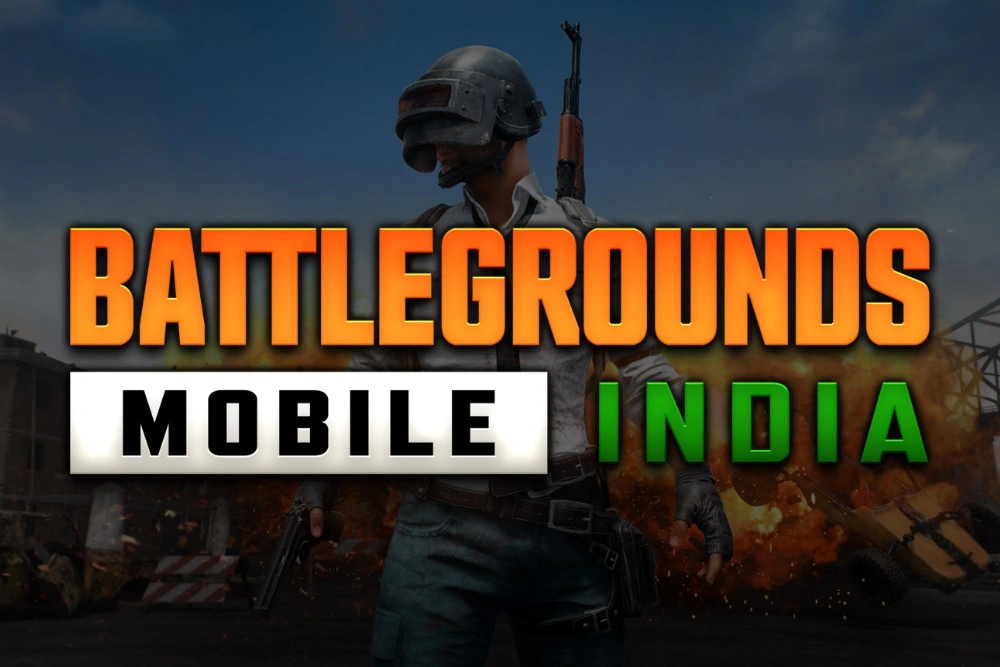
BATTLEGROUNDS MOBILE INDIA, published by Krafton, gained substantial market share from Garena Free Fire and PUBG Mobile and became one of the best-known battle royale games in India. According to SocialPeta's data cited in the original article, the game acquired 34 million Android users within one week of release.
Casual games were less dominant than shooters but still accounted for 9% of the market in SocialPeta's analysis. Playrix had two casual games among the top 10 games by revenue in February. Match-3 and parkour games were among the most popular casual categories in India.
To examine these trends more closely, SocialPeta Research used its app and advertising intelligence data to select three popular games and analyze their marketing characteristics.
Analysis of Popular Games in India
1. Ludo Supreme Gold: Real-Money Rewards Attract Players
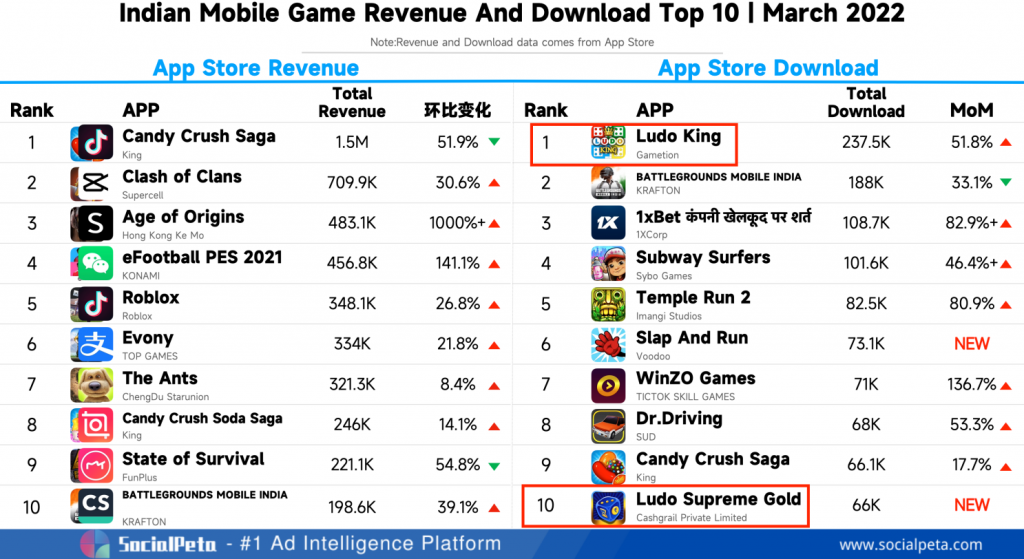
Ludo games have long enjoyed strong popularity in India. Ludo King, released in 2016, remained among the country's top three games by downloads for years.
Ludo Supreme Gold combined familiar Ludo gameplay with real-money mechanics and appeared in India's March 2022 ranking.
Its advertising creative emphasized the combination of simple board game mechanics and the opportunity to earn real-money rewards. SocialPeta Research identified these two elements as important user acquisition hooks for the title.

2. BATTLEGROUNDS MOBILE INDIA: Social Communication at the Core
BATTLEGROUNDS MOBILE INDIA benefited from a strong player base as it was widely regarded as a replacement for PUBG Mobile in India. The game overtook Call of Duty and remained the country's No. 1 most-downloaded game in the period covered by the original analysis.
Multiplayer games satisfy players' demand for social interaction, while fast-paced gameplay and dramatic combat scenes work well for live streaming and esports.
After examining shooter-game ad creatives with SocialPeta's creative intelligence capabilities, SocialPeta Research found that advertisers frequently highlighted games as places to communicate, socialize and make friends.
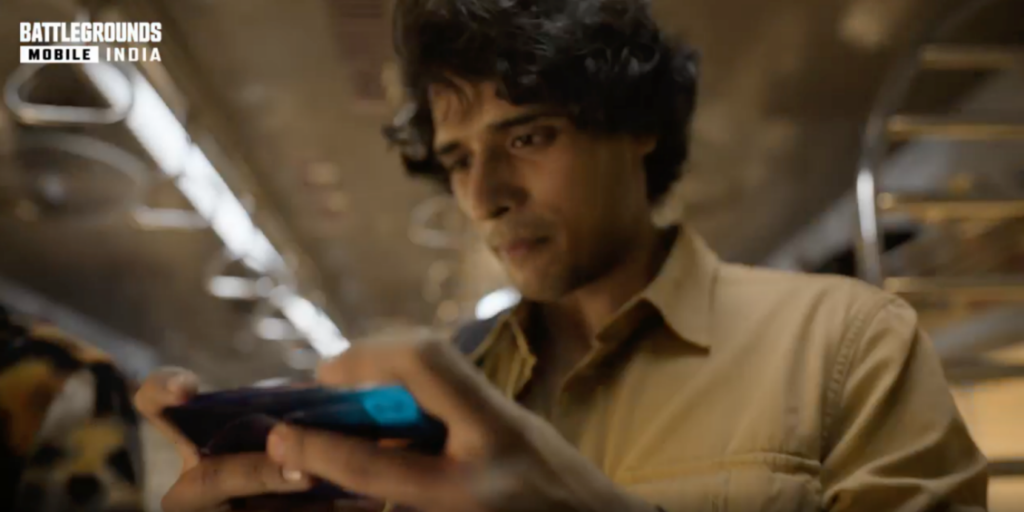
One popular BATTLEGROUNDS MOBILE INDIA creative showed players gaming on a train, in restaurants, in barbershops and even while brushing their teeth. People in the real-world scenes transformed into in-game characters and fought together.
By alternating noisy everyday environments with gameplay scenes, the creative emphasized both the social nature of the game and the convenience of playing mobile games in different settings.
3. Food Cutting: Female Gamers Support the Rise of Casual Games
Food Cutting, a casual business simulation game, recorded more than 1,000% month-over-month download growth in February 2022 according to the original SocialPeta analysis.
The sharp increase suggested significant potential for hyper-casual games in India. SocialPeta Research attributed part of the rise in casual games to greater smartphone adoption and an increasing number of female gamers.
The original research stated that the share of female gamers in India had increased from 18% to 49%, while women accounted for 70% of the core audience for casual games.

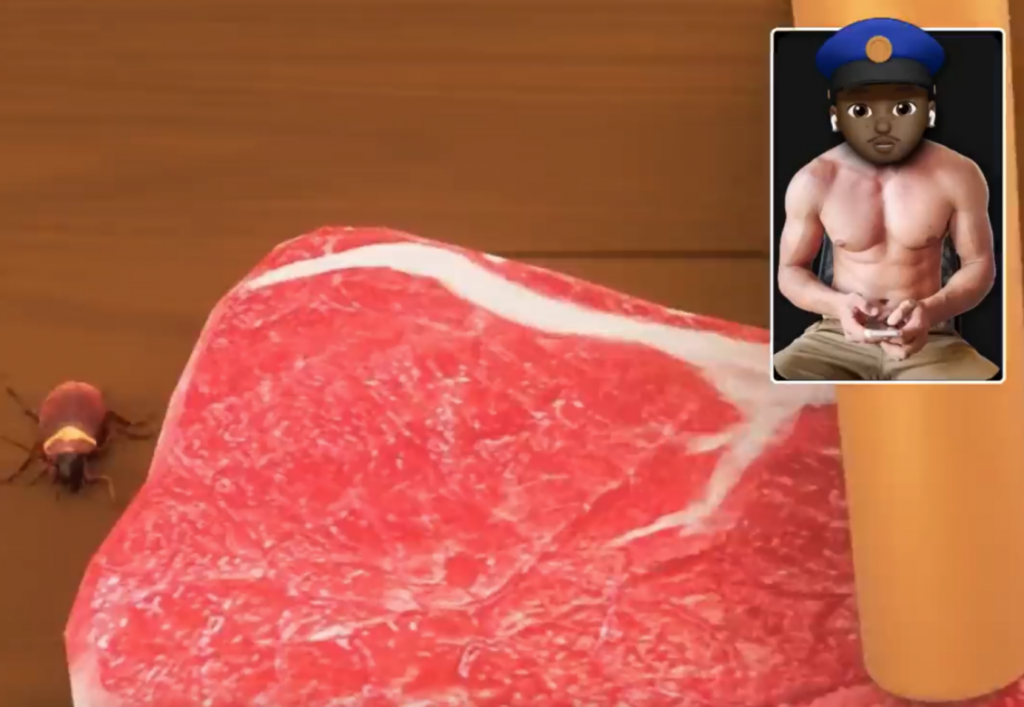
Food Cutting's creative targeted this audience with a deliberately exaggerated and unusual scenario. It combined an attention-grabbing character in the corner with a scene in which a cockroach was repeatedly smashed into a piece of meat.
The following gameplay intentionally showed clumsy actions designed to frustrate viewers and encourage them to try the game themselves. It followed a familiar hyper-casual advertising pattern: an absurd process followed by an intentionally bad outcome.
Challenges Facing India's Game Market
Access to 4G networks and the control measures introduced during the COVID-19 pandemic created two major opportunities for games in India. During that period, the market grew rapidly.
SocialPeta Research nevertheless identified three major challenges facing the market at the time.
1. The Stay-at-Home Economy Was Fading
Much of the rapid growth in Indian gaming during 2021 was associated with pandemic restrictions. With people spending more time at home, games benefited from additional leisure time and attention.
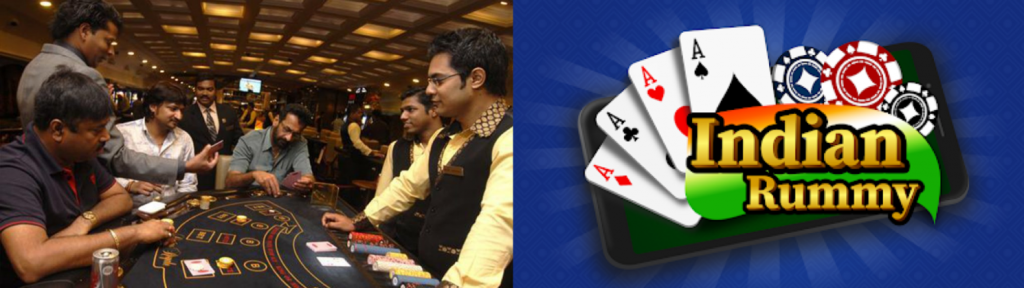
As restrictions eased, consumers once again had more options for entertainment, including offline group activities and gambling.
2. Local Games Remained Relatively Weak
Despite restrictions affecting many foreign apps, many of India's leading games were still developed or published by overseas companies.
Real-money and gambling-style games represented a distinctive part of the local market, but SocialPeta Research observed that many of these products relied on gameplay models that had changed little over the years. Their market share was therefore declining rather than expanding in the period analyzed.
3. Aging Gameplay and User Loss
These challenges were not limited to gambling-style games. Many local titles faced similar problems, including aging gameplay, declining user interest, user acquisition pressure and difficulties with long-term operations.
SocialPeta Research argued that game companies needed to study market information more closely and make active adjustments based on changing player preferences and feedback.
Keeping Pace with Market Trends
Based on its analysis of popular games in the market, SocialPeta Research highlighted three development trends for leading Indian games at the time:
- Leading games would increasingly satisfy players' demand for social communication, with multiplayer titles demonstrating their value as places to interact and make friends.
- Developers would increasingly integrate hyper-casual elements into gameplay while targeting the growing female gaming audience in India.
- Real-money games would increasingly adopt familiar casual-game mechanics.
Changes in Indian mobile game trends were closely connected to the country's broader social, political and economic environment. As the benefits of the stay-at-home economy faded and network infrastructure continued to improve, game companies needed to pay closer attention to changing user preferences.
For developers and publishers, market intelligence and advertising data can help reveal changes in genre demand, competitor positioning and user acquisition strategies as the market evolves.