
Hyper-Casual Music Games: How Developers Cut Music Costs
High music licensing costs have pushed mobile music game developers toward simpler gameplay, electronic music, user-uploaded tracks and highly visual ad creatives. SocialPeta looks at how leading titles approached that challenge.
How Mobile Music Games Are Changing
Have you played music games before?
Music games in the past were primarily about hitting notes and pressing buttons in time with the music.
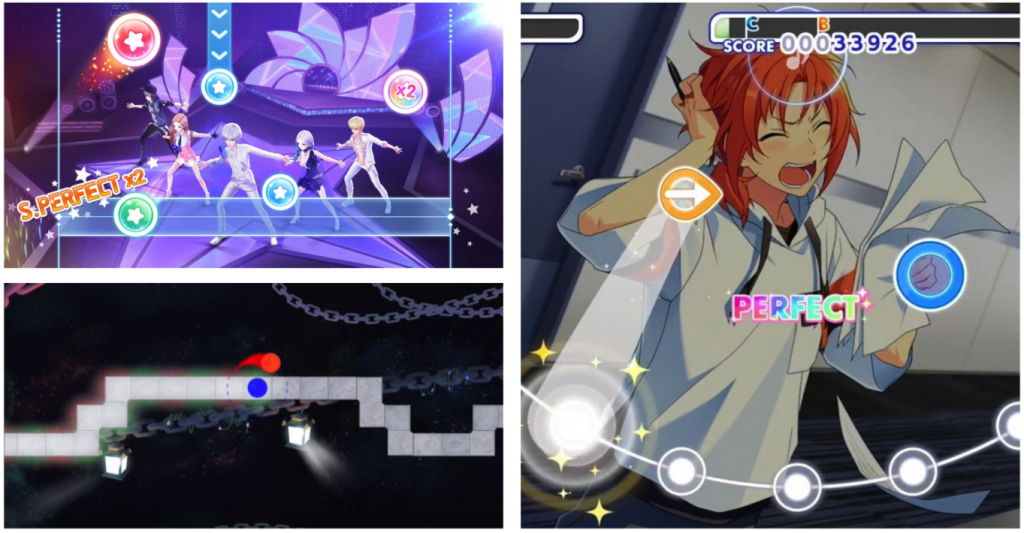
Many of the globally popular mobile music games that followed began to look very different. Instead of putting complex rhythm input at the center of the experience, they increasingly incorporated parkour, item collection and other hyper-casual mechanics.
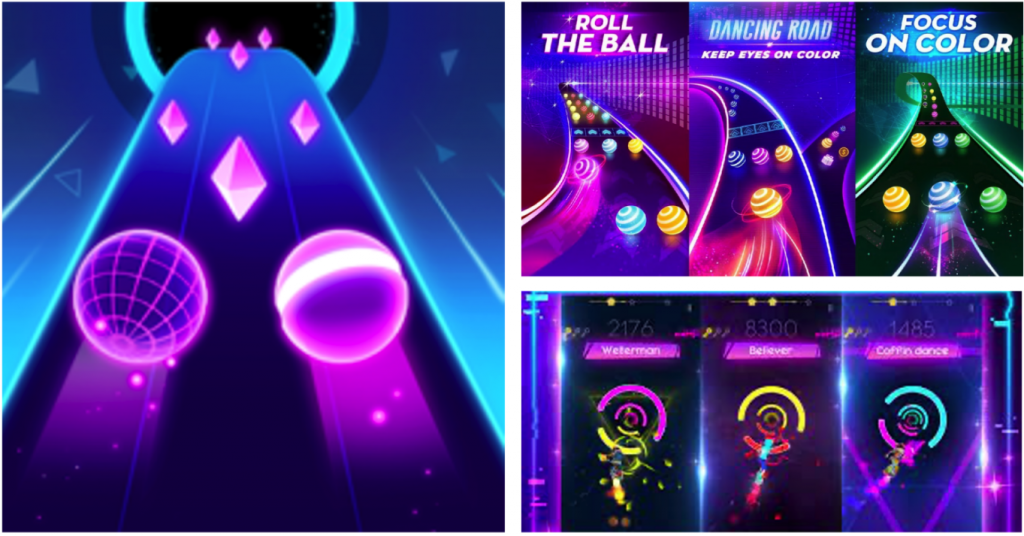
Due to sky-high music copyright fees hanging over developers like the sword of Damocles, both hyper-casual and traditional music games have had to compromise. Southeast Asian companies and Chinese companies found different ways of coping with the problem.
Below, SocialPeta examines how several mobile game companies tried to break through the music game industry's barriers through gameplay design and advertising creatives.
Amanotes and the Hyper-Casual Music Strategy
Dancing Balls and Shifting Colors
- Advertiser
- Dancing Road: Color Ball Run!
- Publisher
- Amanotes
- Features
- Music rhythm + rolling balls + collecting items
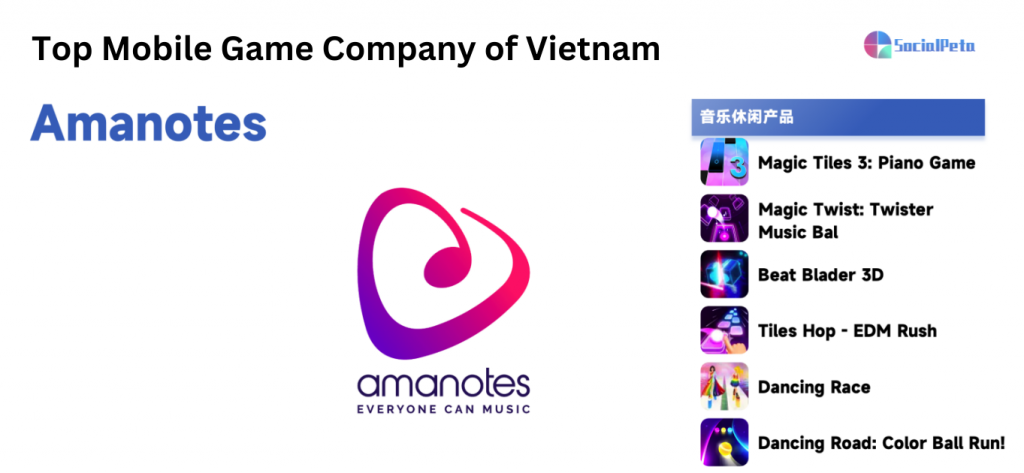
Vietnamese company Amanotes is one of the most successful mobile game studios in the hyper-casual music game category. At the time of the original article, the company had released more than 50 games, accumulated over 2 billion downloads and reached 120 million monthly active users.
Based on SocialPeta's analysis of Amanotes' different music games, the combination of music + hyper-casual gameplay represented a long-term product strategy for the company.
In Dancing Road: Color Ball Run!, parkour plays a much larger role than music rhythm itself. The item-collection mechanic also lowers the difficulty and makes the game easier to play.
Avoid White Tiles and Mix in Familiar Music
- Advertiser
- Magic Tiles 3: Piano Game
- Publisher
- Amanotes
- Features
- Music rhythm + avoiding white tiles + hitting notes
Magic Tiles 3 is one of Amanotes' best-known products. Its gameplay clearly draws from the formula popularized by Piano Tiles, a game launched by Cheetah Mobile.
With a large and continuously updated music library and online battles designed to encourage social interaction, Magic Tiles 3 frequently appeared among the most-downloaded mobile games during the period discussed in the original article.
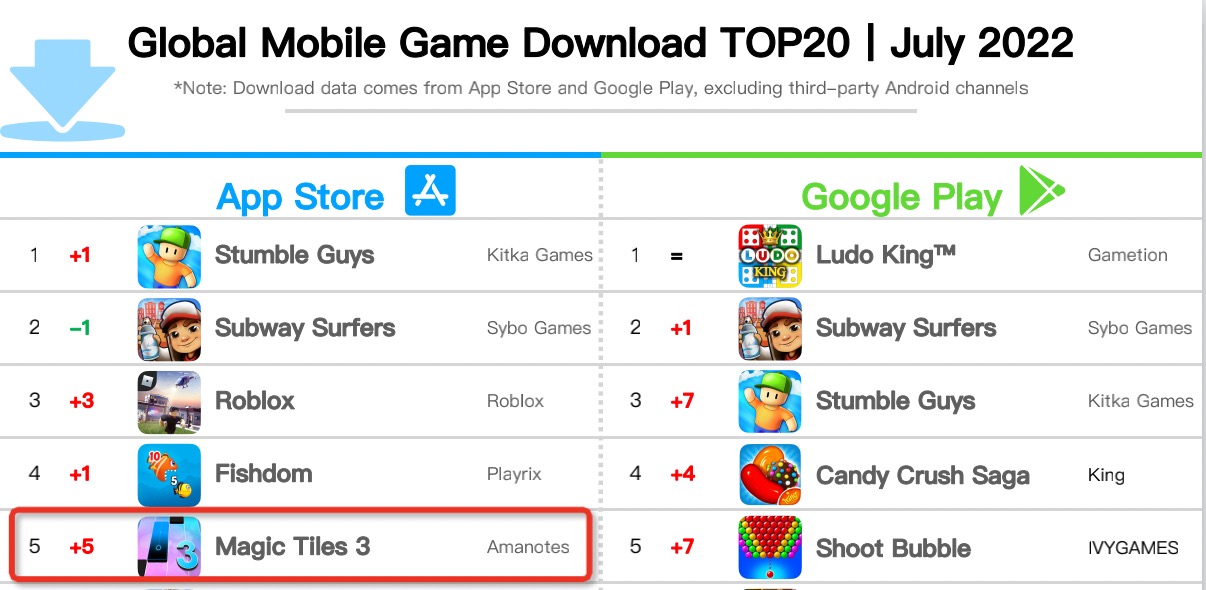
Magic Tiles 3 had already been on the market for several years. Rather than frequently changing its core gameplay, the game focused on updating songs, maintaining its user base, and operating festival and holiday events.
From the volume and style of its advertising creatives, SocialPeta considered Magic Tiles 3 to be in a relatively stable advertising period. Its creatives mainly featured combinations of popular songs together with demonstrations of the music library and core gameplay.
Another older Amanotes music game, Tiles Hop, took a different approach. While Magic Tiles 3 offered paid music packages, Tiles Hop addressed both high copyright costs and insufficient playable levels through an official music library, user-uploaded music and AI-based music recognition.
Traditional Music Games and Advertising Strategies
Traditional on the Surface, Fashionable Inside
- Advertiser
- Dream Piano
- Publisher
- Eyugame Network
- Features
- Music rhythm + hitting notes
As a globally recognized music game at the time, Dream Piano followed traditional rhythm-game design. Players tapped or held falling objects in response to the beats and notes of the music.
Thanks to its familiar gameplay, polished graphics and updated music library, Dream Piano had remained one of the more visible music games since its release in 2017.
SocialPeta also attributed part of the game's global visibility to the large number of stylish advertising creatives released over time. According to SocialPeta's monthly ad creative rankings, Dream Piano frequently appeared in the iOS Top 20 during the period covered by the article.
Using SocialPeta Advertiser Analysis, the original article grouped Dream Piano's creatives into four major patterns:
- Cartoon characters, attractive covers and characters inspired by older bishōjo games.
- Dancing animals, including eye-catching dogs and alpacas.
- TikTok-style videos combining live-action footage and animation.
- Simple live-action video creatives.

Parkour Music Games and Cyberpunk-Style Design
Sonic Parkour: Beat and Skateboard
- Advertiser
- Cyber Surfer: EDM & Skateboard
- Publisher
- Badsnowball
- Features
- Music rhythm + parkour action + dressing-up
Cyber Surfer: EDM & Skateboard is an atypical hyper-casual music game released in February 2021.
To simplify the gameplay and make the experience easier to understand, Cyber Surfer replaced traditional quick-time-event button inputs with larger colored blocks and removed complex, multi-level note-hitting mechanics.
Players ride a skateboard and dash through blocks of specific colors until the music ends. The combination of simple gameplay, dynamic rhythm and electronic music creates a highly visual and immediately understandable experience.
Cyber Surfer generates revenue through payments for unlocking songs, purchasing items and changing character appearances. As with many hyper-casual games, advertising is also an important monetization channel, with players able to obtain revival chances by watching video ads.
Cyber Surfer was not Badsnowball's first hyper-casual music game. The publisher had already been active in music-action mobile games after launching Sonic Cat in 2019 and Smash Colors 3D in 2020.
Across those games, Badsnowball repeatedly used a combination of music, rhythm interaction and cosmetic customization for parkour rhythm games, whether the experience centered on skateboarding or dancing balls.
Twin Balls Double the Fun
- Advertiser
- Rolling Twins - Dancing Ball
- Publisher
- Cobby Labs
- Features
- Music rhythm + ball parkour + item collection + dodging obstacles
Compared with parkour music games that place more emphasis on action, Rolling Twins - Dancing Ball is more casual in both its gameplay and its advertising creatives.
In the game, a ball moves with the music while collecting items and avoiding monsters. The core structure resembles familiar endless runner games such as Temple Run and Subway Surfers, although its visual design and music-oriented presentation are different.
The game's main promotional hook is the "Twins" mechanic. This special skill allows the dancing ball to divide into two balls and collect all available items.
Advertising creatives often demonstrate the twin-ball effect at the climax of the music, creating a combined visual and audio payoff intended to persuade viewers to download the game.
According to SocialPeta Advertiser Analysis, Rolling Twins creatives primarily used gameplay demonstrations, comparisons of results and displays of different appearances.
Is Dancing Hair Really a Music Game?
- Advertiser
- Dancing Hair - Music Race 3D
- Publisher
- Tinymax Games
- Features
- Music rhythm + female-targeted items + item collection + dodging obstacles
Beyond the more conventional casual music games described above, there is another loose category of titles that can be classified as music games largely because they contain strongly rhythmic music and characters whose actions react to that rhythm.
Dancing Hair - Music Race 3D is one example. Its gameplay includes hair extensions, hair dyeing and other appearance-focused items aimed primarily at female players. Its connection to the music-game category comes largely from the strong rhythmic soundtrack accompanying the gameplay.
This structure also makes the formula relatively easy to adapt. Hair-related items can be replaced by other fashion-focused elements such as high heels or skirts while retaining the same underlying casual gameplay loop.
What Hyper-Casual Music Games Reveal
Looking across these popular casual music games, SocialPeta's original conclusion was that pressure from high music copyright costs encouraged developers to move in several directions:
- Build games that are more gameplay-oriented than music-oriented.
- Use comparatively lower-cost electronic music.
- Allow users to upload their own music.
Among the hyper-casual music games discussed in the article, parkour mechanics appear frequently, while dressing-up and appearance items provide an additional route to monetization. Personal and customizable cosmetic items can give players another reason to spend beyond the core music experience.
The games also share a recognizable visual language. Light pink, light purple, bluish violet and electric neon colors frequently appear in their interfaces and advertising, helping the products communicate rhythm, speed and fashion at a glance.
The broader lesson from these 2022 examples is that a music game does not have to rely entirely on licensed songs or complex rhythm mechanics. Developers increasingly treated music as one part of a broader casual gameplay and creative strategy.