
Media Buying Is Getting Harder: How Strategy Game Companies Respond
Rising acquisition costs and rapid creative fatigue forced strategy game publishers to rethink both advertising and product design. SocialPeta's historical analysis highlights three approaches that became increasingly visible across the SLG market.
Why Media Buying Became More Difficult
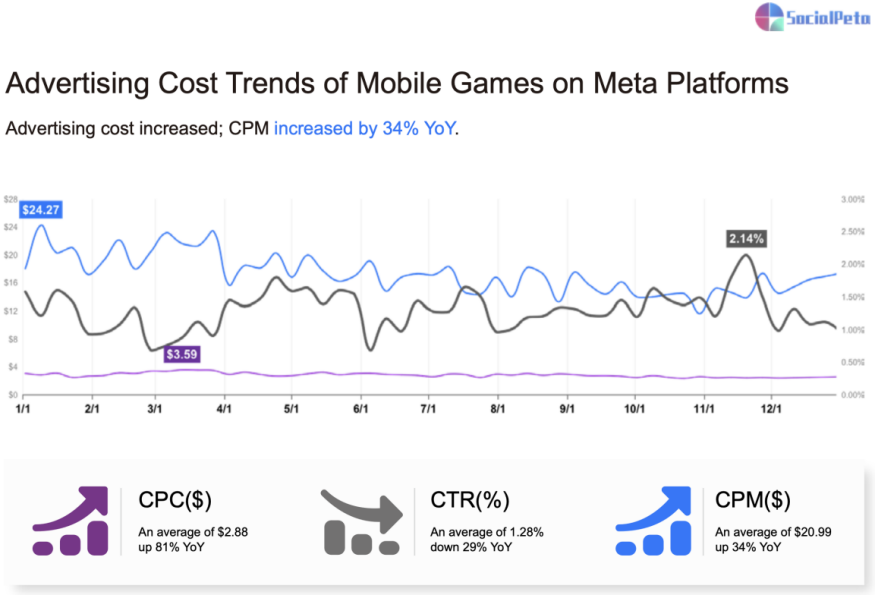
By 2021, the cost of acquiring mobile game users had become a major concern for publishers. According to SocialPeta's 2021 Global Mobile Game White Paper, the average CPM across advertising platforms operated by Meta reached roughly $21, representing an increase of about 34% compared with 2020.
For publishers already dependent on paid acquisition, this made difficult media buying and increasingly expensive advertising two particularly urgent challenges.
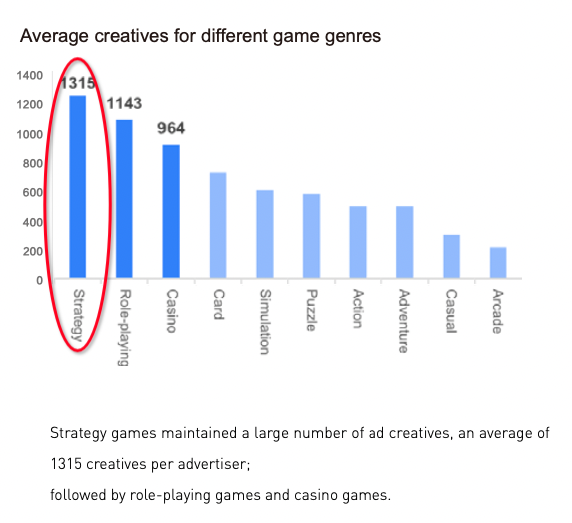
Strategy games faced especially intense pressure because their acquisition models depended heavily on continuous creative production. SocialPeta's historical data showed an average of 1,315 different creatives for each strategy game advertiser in 2021, higher than any other game genre in the comparison.
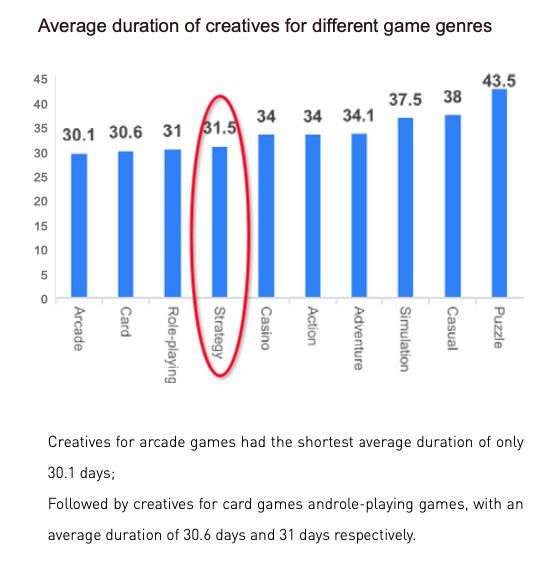
Those assets also had to be replaced quickly. A strategy game creative remained active for an average of approximately 31.5 days. Only arcade game creatives had a meaningfully shorter lifespan in the dataset.
Because strategy game publishers relied so heavily on paid acquisition, they needed to react quickly when creative formats or product positioning stopped working. Based on SocialPeta's observation of more than five million strategy game creatives, three changes became particularly notable.
Light Gameplay Became a New Strategy Game Advertising Trend
Strategy games, particularly SLGs, were competing for an increasingly limited pool of players. Years of aggressive acquisition had made the market more difficult, while experienced strategy players had also become familiar with recurring creative patterns such as heavily dramatized UE4-style scenarios.
To reach users beyond the traditional hardcore strategy audience, publishers increasingly incorporated casual mechanics into their ad creatives. Hyper-casual gameplay was a natural source of inspiration: simple mechanics were easy to understand immediately and had already demonstrated broad audience appeal.
Two examples highlighted in the original analysis were The Ants: Underground Kingdom and Lords Mobile: Tower Defense. SocialPeta's historical backend estimates indicated that each example accumulated more than two million impressions during a creative lifetime of roughly 50 days.
The Ants: Underground Kingdom
- Creative duration
- 48 days
- Estimated impressions
- 2.1M
Lords Mobile: Tower Defense
- Creative duration
- 53 days
- Estimated impressions
- 2.3M
The trade-off was user quality. Feedback cited in the historical SocialPeta analysis suggested that casual-looking creatives could attract a large volume of users quickly, while retention among those users could be relatively weak.
For strategy game marketers, the lesson was therefore not to replace the core product proposition with casual gameplay indiscriminately. Light-gameplay creatives worked best when their role matched the game's acquisition objectives and the experience users would eventually encounter after installation.
Live-Action Creatives Became Popular with Strategy Game Companies
Scenario-driven live-action advertising had previously been strongly associated with MMORPG promotion. These ads often used exaggerated characters and dramatic conflicts to connect an in-game power fantasy with situations in the real world.
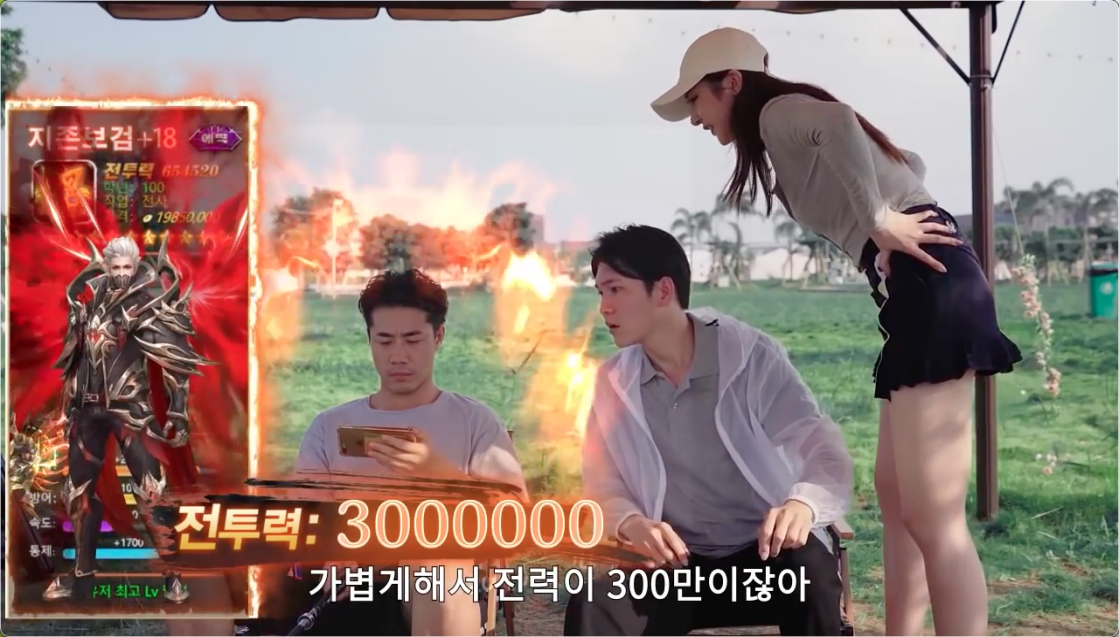
By 2021, the format was increasingly visible in strategy game advertising as well. SocialPeta's historical data noted one popular SLG where live-action material accounted for more than 70% of its popular creatives during Q4 2021.
Lilith Games was one of the companies experimenting most visibly with the format. Following the March 2021 release of WARPATH, Lilith promoted a live-action video adapted from the game and later continued exploring live-action scenarios in other campaigns.
The original article also highlighted a Rise of Kingdoms campaign that was advertised on TikTok for four days and approached one million likes.
Meanwhile, strategy game ads built primarily around UE4-style gameplay sometimes inserted a short live-action opening to capture attention before moving into rendered game footage. State of Survival was cited as an example of this approach.
Hybrid SLGs Expanded Their Potential Audience
Creative strategy was only part of the response. A growing number of strategy games released after 2020 also changed the product itself by combining traditional SLG systems with an additional gameplay layer. Common additions included merge mechanics, match-3 puzzles, and tower defense.
Puzzles & Survival from 37Games was one of the notable examples. The original article cited its strong position among strategy games in Japan.
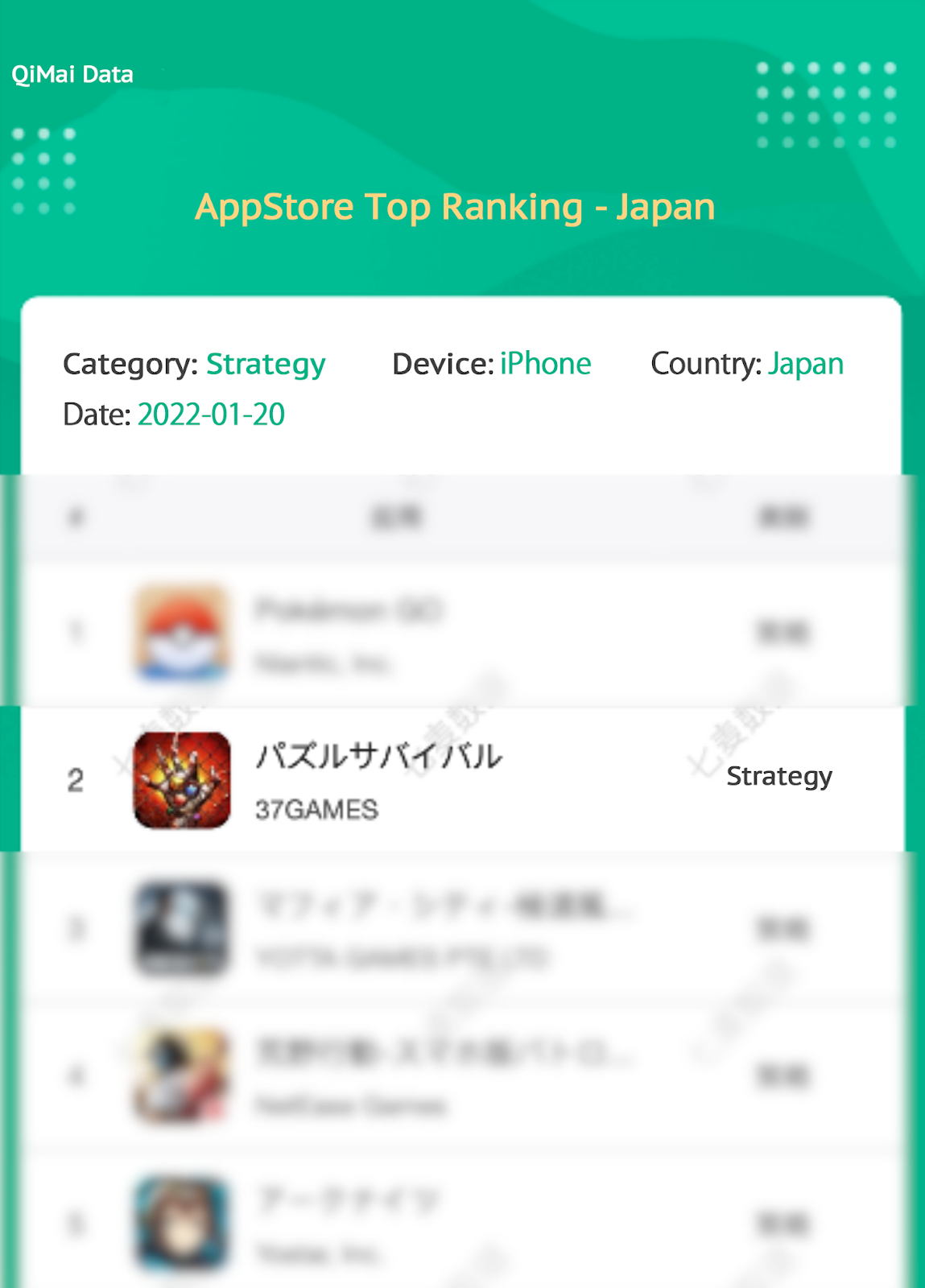
One reason for adding these secondary mechanics was the onboarding challenge common to deeper strategy games. New users often need time before they understand the systems that make an SLG rewarding, which can create substantial early-stage churn.
By adding a familiar and immediately understandable mechanic, publishers could give new players a simpler entry point before introducing the deeper middle- and late-game strategy systems. The original article referenced an external discussion of approaches to improving user retention.
Hybrid gameplay also gave advertisers more flexibility. The same product could be presented with lightweight mechanics when targeting a broad audience, while other creatives could emphasize the deeper strategic layer for established SLG players.
Kingdom Guard, which Tap4Fun promoted heavily during 2021, illustrated that approach: its opening experience devoted substantial time to tower defense before the broader strategy systems became the focus.
Conclusion
Rising acquisition costs and higher expectations from mobile players meant that strategy game companies could no longer depend on one established advertising formula. Publishers needed to improve both the quality of their games and the ways those games were introduced to prospective users.
The trends visible at the time pointed in the same direction: publishers were experimenting with hybrid SLG mechanics to broaden their audience, lighter creative concepts to reach casual users, and influencers or real actors to make advertising more immediate and relatable.
From the article's original 2022 perspective, the central theme was therefore change. Strategy game marketers were being pushed to iterate more quickly across creative production, user acquisition, and game design as the economics of mobile media buying became more demanding.