
Mobile version of Apex has come out, another “Tencent” battle royale game
A 2022 SocialPeta analysis of Apex Legends Mobile's global launch, its aggressive pre-launch media buying, and the creative strategies used to differentiate the battle royale title on mobile.
Apex Legends Mobile Enters the Battle Royale Market
On the evening of May 12, Apex Legends Mobile, referred to as APEX M in this article, was officially announced for a global launch on May 17, marking the arrival of another mobile competitor in the global battle royale game market.
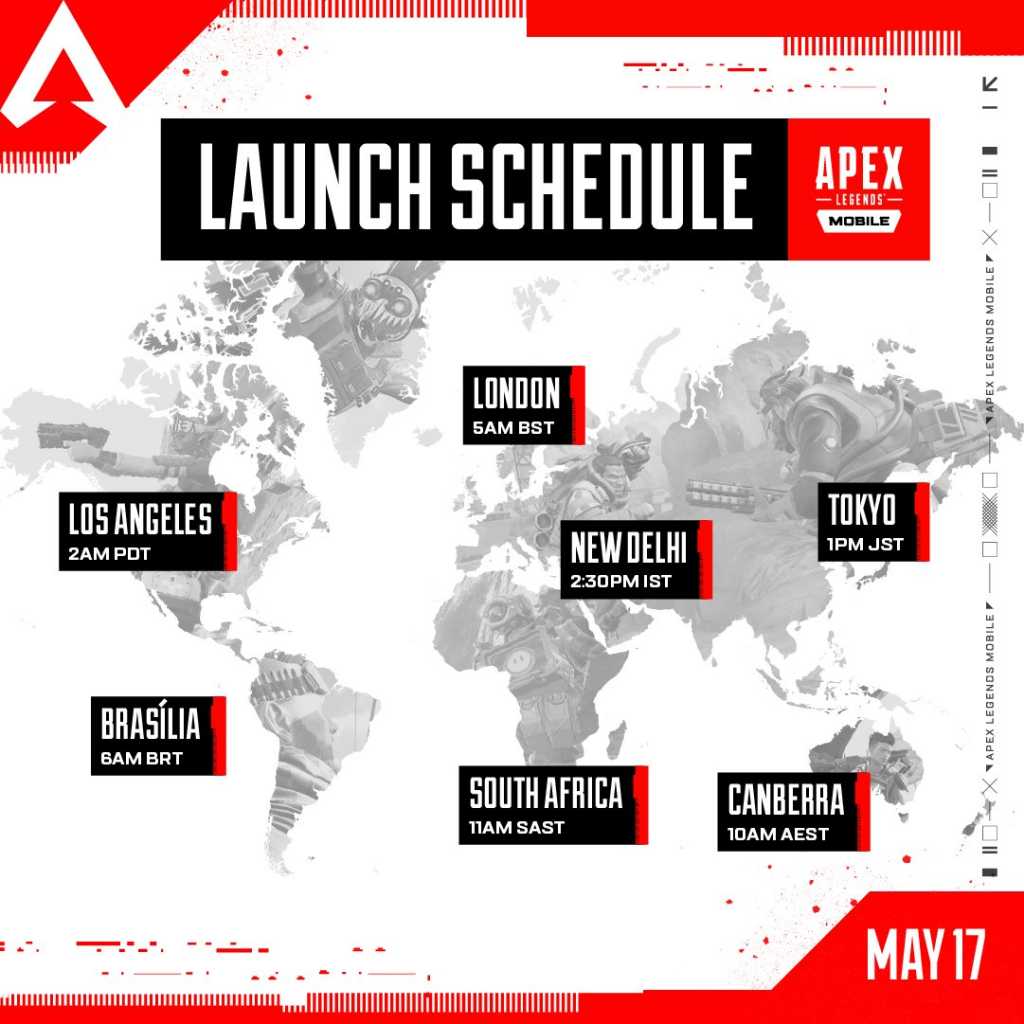
APEX M received an enthusiastic reception and caused quite a stir in the market. Among the 145 countries and regions where the game was available on the App Store, APEX M topped the free game charts in 47 countries and regions, including the United States and Japan. It also ranked from No. 2 to No. 10 on the free game charts in 46 countries and regions, including the United Kingdom, France, and Germany.
Although it was neither as well known as PUBG among battle royale players nor as widely associated with first-person shooters as Call of Duty, the multiplayer battle royale shooter distinguished itself with its own style and gameplay identity.
What Is So Great About This "Hyperactive" Game?
Apex Legends was officially launched during the 2019 Spring Festival. Battle royale games were booming during those years, but Apex Legends stood out. Without overwhelming promotional activity after release, the game built a strong reputation among shooter fans through its distinctive gameplay, concise interface system, and fast, intense battles.
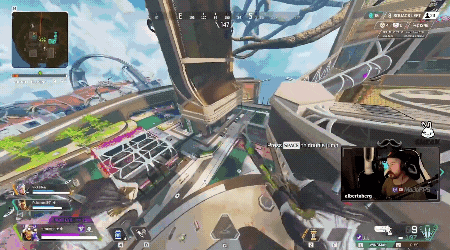
Apex Legends is set in the same science-fiction universe as Respawn Entertainment's Titanfall series. In the first month after its release, the game generated $92 million and attracted more than 50 million registered players. By April 2021, it had surpassed 100 million registered players globally. That market performance laid a strong foundation for a future mobile version.
The mobile version, developed with Tencent's Lightspeed and Quantum Studios, began its first testing in April 2021. Testing was later expanded to Peru, Colombia, Indonesia, Egypt, and Lebanon in July.
One challenge in translating Apex Legends to mobile was adapting the PC game's diverse cast of characters and highly active gunplay to touchscreen controls. The mobile version therefore introduced shortcuts such as auto loot, quick loot, and quick marking.
We installed and played the public beta as soon as it was released. Overall, APEX M felt similar to PUBG Mobile in its UI, interaction logic, and gameplay mechanics, while its shooting experience and graphics had similarities to Call of Duty: Mobile. At the same time, it retained much of the feel of the original Apex Legends and delivered a strong shooting experience and impressive visuals.

Compared with Apex Legends on PC, APEX M used a more concise interface and simplified mechanics. The biggest difference from a marketing perspective, however, was how actively the mobile version advertised itself.
As more PC games moved to mobile platforms, SocialPeta's view at the time was that product quality and advertising needed to work together for a mobile adaptation to become a major hit.
Apex Legends Mobile Media Buying: 59 Creatives a Day
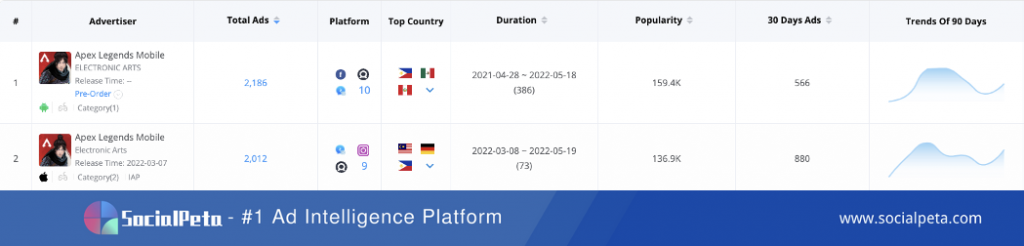
According to data captured by SocialPeta at the time, APEX M started placing ads on March 8, 2022, 70 days before its public beta. During that period, it released a total of 4,100 deduplicated creatives across iOS and Android.
That translated to an average of approximately 59 new creatives per day, reflecting a highly active user-acquisition campaign before the global launch.
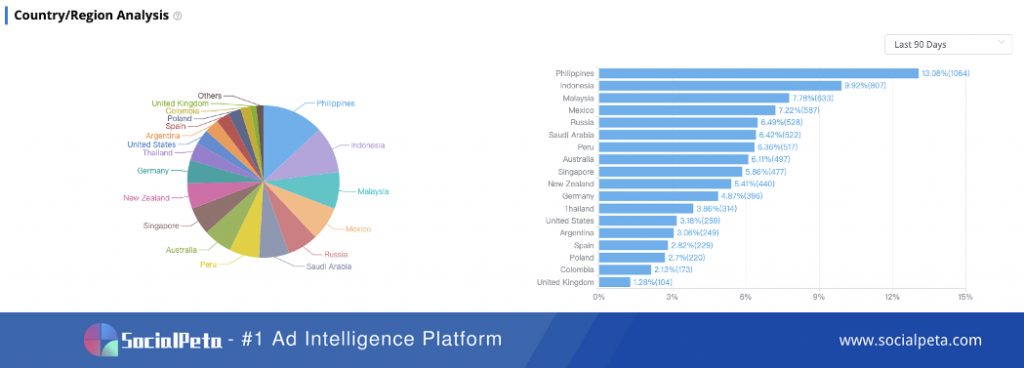
Across countries and regions, the campaign concentrated on Southeast Asia, South America, Oceania, and North America. The Philippines received the largest share of creatives, accounting for approximately 13% of the total.
Video accounted for approximately 96%of APEX M's creatives. Much of the creative strategy emphasized the similarities between the mobile release and the original PC game.
Trailers and game cutscenes highlighted intense battles through rapid changes in perspective and continuous action. The approach made the excitement of the game immediately visible, although the article noted that some of the rapidly changing sequences could have been edited more smoothly.
Advertising Platform: Google Ads
Duration: 38 days
Estimated Impressions: 187.4K
Another differentiating element was the introduction of a new Legend, Fade, whose real name is Ignacio Huamaní. Fade came from a family of military-tech hunters and was designed around advanced military technology.
At the time of the article, Fade was positioned as a character exclusive to the mobile release. This gave APEX M another product feature that could be highlighted in its advertising instead of relying entirely on familiarity with the PC game.
The legacy article also contained a SocialPeta creative featuring Fade. Its media source is not exposed by the currently retrievable page markup and therefore has not been replaced with an invented asset.
Why PC Game Franchises Were Moving to Mobile
In 2022, Apex Legends was part of a broader movement of established PC and console franchises expanding onto mobile devices.
At the time, Diablo Immortal was preparing for release, Dungeon Fighter Mobile had launched in South Korea on March 24, 2022, and a mobile version of Battlefield had been announced for testing.
From the perspective of the original article, releasing mobile adaptations had become an effective way for classic PC game franchises to reach new audiences. It also meant that publishers needed to adapt their marketing strategies to the habits and expectations of mobile users.
Based on SocialPeta's analysis of successful mobile adaptations, the article highlighted three recurring marketing approaches.
Use Classic Elements to Anchor Existing Players
Existing players are an important foundation for any mobile adaptation. Many mobile versions of established PC titles therefore emphasize elements faithfully carried over from the original game.
In advertising, recognizable elements can act as immediate anchors for existing fans. These can include classic maps, mascots, weapons, characters, and other visual identifiers associated with the franchise.

The purpose is not simply nostalgia. Recognizable franchise assets reduce the amount of explanation needed in a creative and quickly signal continuity between the original title and its mobile adaptation.
Differentiate Advertising Within the Same Genre
The battle royale market already contained many successful titles. Entering an established category therefore required more than communicating that another battle royale game was available.
The original SocialPeta analysis argued that advertisers should focus on the features that make their game different from competing titles. For APEX M, hero abilities, character identity, rapid movement, and cutscenes showing intense combat provided direct material for this type of differentiated marketing.
In other words, the creatives communicated not only the genre, but also the specific reasons a battle royale player might choose Apex Legends Mobile instead of another title in the same category.
Use Casual Content to Reach Mobile Players
The article also observed that mobile audiences could include more casual and socially oriented players than the traditional PC or console audience for a hardcore game.
That difference can affect creative strategy. Even games built around intense combat can experiment with comics, humorous situations, character interactions, and other lighter creative formats to reach audiences beyond highly committed genre fans.

As mobile devices continued to improve, the original article expected more AAA-style game experiences to become viable on smartphones. It concluded that mobile adaptations of established PC games would become increasingly common, making mobile-specific acquisition and creative strategies more important for publishers.
For marketers, the APEX M launch illustrated a broader lesson: recognizable IP can create initial demand, but sustained mobile user acquisition still depends on creative volume, market-specific distribution, and a clear presentation of what makes the mobile product different.