
The New Rising Revenue King of the Merge Genre: How Gossip Harbor Conquered the U.S. Market
Gossip Harbor combined story-driven merge-2 gameplay, live operations, holiday offers, and steady user acquisition to challenge Travel Town and accelerate its growth in the U.S. casual game market.
Gossip Harbor Challenges the Merge Revenue Leader
In the casual gaming sector, match-3 games have long dominated revenue streams. However, in 2024, the merge genre gained significant attention as a promising contender, showing the potential to challenge match-3 games in popularity.
A powerhouse in the merge genre, Travel Town is a name many mobile game observers are likely familiar with. In 2024, it claimed the title of the highest-grossing merge mobile game, generating $117 million in in-app purchase revenue to date, representing a remarkable 231% year-on-year growth.
Originally launched by Magmatic Games in 2020, Travel Town experienced significant success after being acquired by Moon Active in 2022.
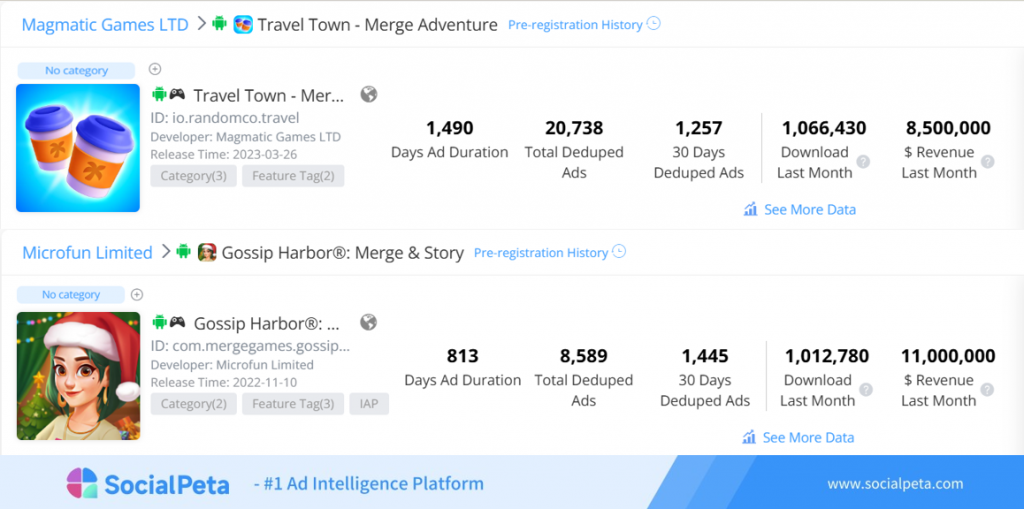
In November, Gossip Harbor, a merge mobile game developed by Microfun, continued the steady growth it had maintained since launch.
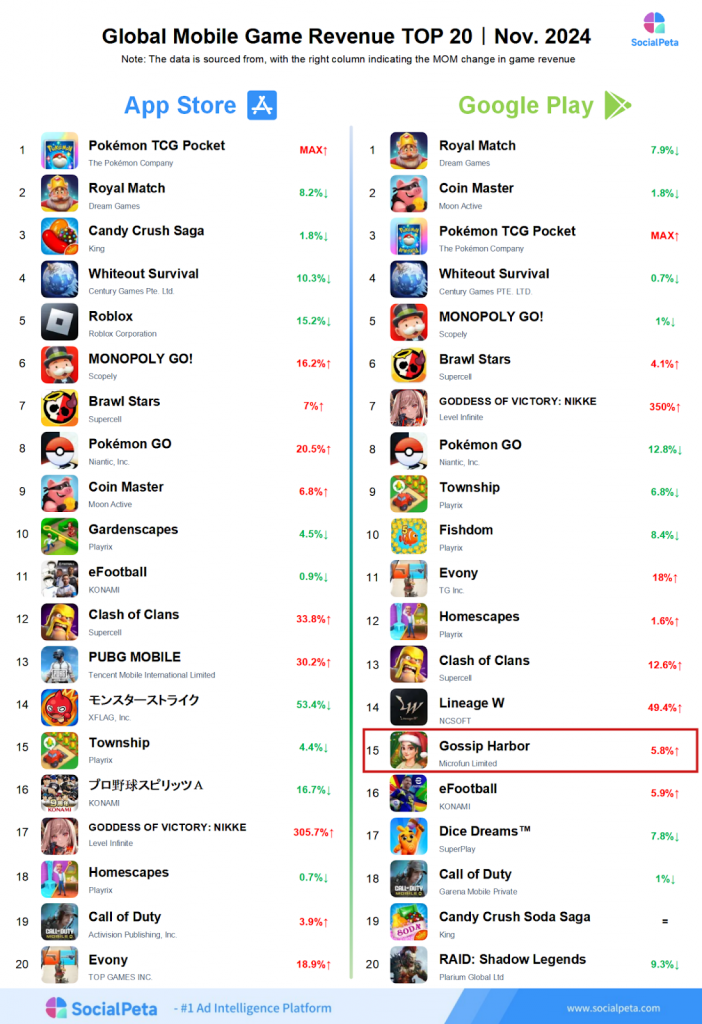
Fueled by a series of Thanksgiving and Black Friday marketing campaigns, the game experienced a revenue boost, surpassed Travel Town, and climbed to No. 15 in the global Google Play mobile game revenue rankings.
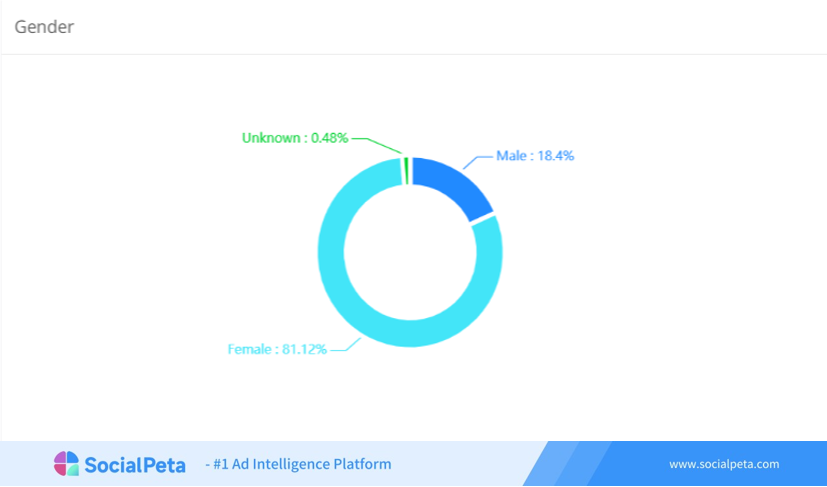
Story-Driven Merge Gameplay for the U.S. Female Market
Gossip Harbor: Merge & Story combines merge gameplay with a narrative-focused progression system designed to deliver an interactive and immersive casual gaming experience.
By August 2024, its revenue had grown nearly tenfold since launch, reaching approximately RMB 114 million, a record high at the time. Revenue from the U.S. accounted for nearly 50% of total earnings. By November, the game had surpassed Travel Town in revenue.
Narrative Progression at the Center of the Experience
The game opens with an animated sequence that establishes its central story. After discovering her husband's infidelity, protagonist Quinn decides to divorce him and returns with her daughter to her family's dilapidated restaurant to begin a new life.
Players accompany Quinn as she rebuilds the restaurant and gradually uncovers more of the story while restoring areas damaged by a fire. By merging food to serve customers, repairing the restaurant, and investigating incidents within its walls, players move deeper into the mysteries surrounding the location.
Gossip Harbor emphasizes story as a core element of its design. Dialogue is kept concise enough to avoid excessive reading while still giving players reasons to remain invested in the characters and plot.
Much of the narrative unfolds inside the restaurant. Early in the game, for example, the restaurant is poisoned, encouraging players to continue progressing in order to discover who was responsible.

Simple Merge Mechanics Support Story Progression
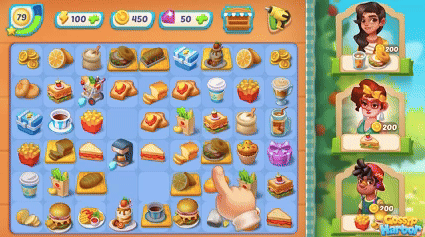
The game also incorporates simulation and home-decoration elements while keeping the core merge gameplay straightforward. Players unlock generators, produce specific items, merge them into higher-level items, complete customer orders, and earn coins.
Those coins are primarily used to unlock and renovate new areas, allowing the story to progress. Keeping coin management relatively simple means players can concentrate on completing orders rather than navigating an unnecessarily complicated currency system.
As players advance, they unlock additional generators that produce a wider range of food items, allowing them to complete increasingly diverse orders.
Social Competition and Visual Positioning
Another feature of Gossip Harbor is its focus on social gameplay elements designed to strengthen retention and conversion. The game includes multiplayer competitions in which players are ranked by how quickly they complete tasks, with rewards distributed according to those rankings.
The game also distinguishes itself through its art style and character design. A vibrant, highly saturated color palette creates a visually striking presentation that is intended to resonate particularly well with its female audience.
Through these product choices, Gossip Harbor combines accessible merge gameplay with narrative progression, competitive features, and a distinct visual identity, giving players an experience with more depth than the merge mechanic alone.
Holiday Monetization and Steady User Acquisition
During the year-end holiday period, traditional Western occasions such as Halloween, Thanksgiving, and Black Friday created an important consumption window for games targeting the U.S. market.
The original analysis cited Tencent data indicating that holiday gaming consumption increased by more than 40%, with the U.S. festive season creating a strong opportunity for internationally focused game developers to increase revenue.
Thanksgiving and Black Friday Offers
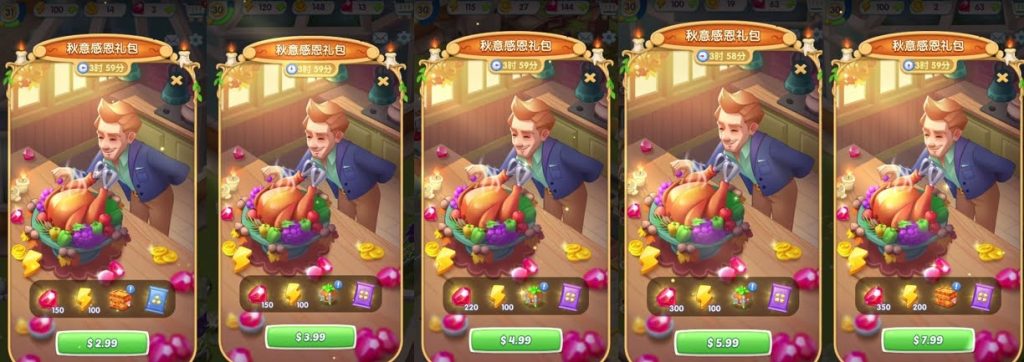
Gossip Harbor used holiday-themed events and promotional bundles to increase player engagement and spending. Thanksgiving and Black Friday packages appeared frequently during the period.
Among them, the $2.99 bundle stood out as a popular option. Its relatively low entry price and resource supply made it especially attractive to lower-spending players.
Weekly Story Updates Support Retention
The game also supports retention through weekly storyline updates, creating an experience similar to following an ongoing serialized show. Frequent updates and suspenseful plot developments give players another reason to return while also supporting continued willingness to spend.
Stable Creative Volume Keeps Acquisition Running
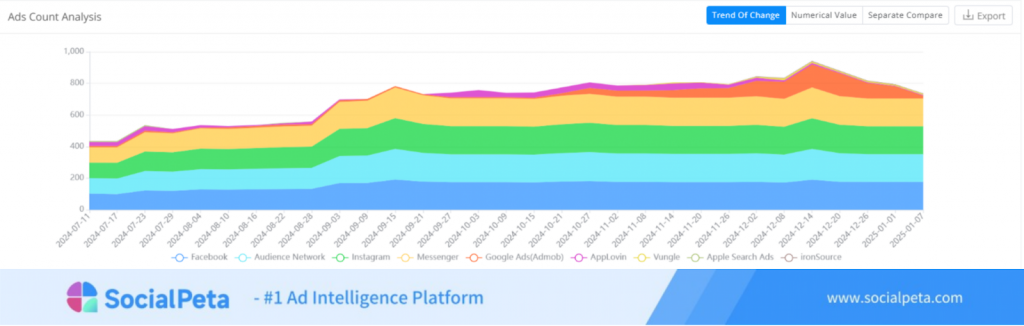
Following an update in early July, Gossip Harbor maintained relatively stable user acquisition activity, with its number of ad creatives generally ranging from 600 to 800.
This consistent advertising presence helped maintain market visibility. At the same time, the game's U.S. daily active users increased from approximately 60,000 to around 120,000, a trend that broadly aligned with its revenue growth during the period covered by the original analysis.
The combination of effective acquisition and a comparatively stable advertising budget became an important part of the game's continued expansion in the U.S. market.
From Jellipop Match to Microfun's Merge-2 Strategy
For observers familiar with China's casual gaming market, Microfun is already an established name. In 2014, the company found significant success in the match-3 genre with Jellipop Match, which became one of its best-performing products.
However, after Jellipop Match, Microfun struggled for a period to reproduce the same level of breakout success with another title.
Since 2021, the company has increasingly explored the merge-game category. Within the Merge-2 segment, it launched Gossip Harbor and Seaside Escape, both of which achieved strong market performance.
The success of those games did not happen overnight. It followed continued experimentation, refinement, and trial and error across multiple products in the merge category.
A Story-Led Merge Framework
Through more precise market positioning and product iteration, Microfun achieved substantial revenue growth. Gossip Harbor and Seaside Escape both follow a framework similar to Love & Pies, combining merge gameplay with narrative progression while adding simulation, management, and decoration elements.
In both games, unlocking more of the story acts as an important progression driver. Players are encouraged to keep completing orders, progressing through the narrative, and making purchases that help sustain that loop.
While the match-3 category had become increasingly saturated by the time of the original analysis, Microfun used the Merge-2 sector as an opportunity to establish a differentiated position through product design and market targeting.
Its performance in the U.S. demonstrates how the combination of a clear target audience, sustained user acquisition, narrative-driven live operations, and accessible merge mechanics can support long-term growth in a highly competitive casual gaming market.