
Top Casual Games Examples Analysis in 2020
SocialPeta's 2020 analysis explores common creative patterns used by popular casual mobile games, including emoji copy, bright colors, vertical formats, playable ads, live-action commentary, and psychology-driven gameplay creatives.
Features of Popular Casual Game Ad Creatives
Casual mobile games occupied an important position in the mobile game market in 2020. Their accessible gameplay made them suitable for short sessions and fragmented leisure time, but the increasingly crowded market also meant that some titles maintained long-term visibility while others disappeared shortly after an initial surge in attention.
Against that backdrop, advertising creativity became an important part of casual game user acquisition. The original SocialPeta analysis argued that games combining fresh creative ideas, novel experiences, timely themes, and appropriate advertising formats had a better chance of attracting attention in the competitive casual game market.
Based on the casual game advertisements examined in the original 2020 article, six creative patterns appeared frequently:
- Make good use of emoji in ad copy.
- Use bright color contrast.
- Adapt creatives to vertical-screen viewing.
- Combine playable ads with video ads.
- Experiment with live-action video commentary.
- Design creatives around audience psychology.
1. Use Emoji Expressions in Ad Copy
In the 2020 creative sample discussed in the original article, emoji appeared frequently in the copy of popular casual game ads. SocialPeta's analysis treated emoji as a simple visual device for catching attention while users scanned advertising content.
The article reviewed casual game ad copy from 2020 and ranked the examples by impressions. Four of the ten highlighted pieces of copy contained emoji. Frequently observed symbols included 🔥, 👉, 🙋, 🎁, 😍, 👏, 📱, 🌹, ⭐️, and ✨.
The article also favored short copy over long blocks of advertising text. Its reasoning was that excessive text could divide the viewer's attention, while images and videos could communicate a game's mechanics and visual appeal more directly.

2. Use Bright Color Contrast
Bright colors were another recurring feature in the casual game creatives examined in the article. Strong contrast can make a creative more noticeable and can help direct attention toward the gameplay area, characters, or other important visual elements.
The original article used two casual game examples to illustrate this approach.
Amazing Block Puzzle
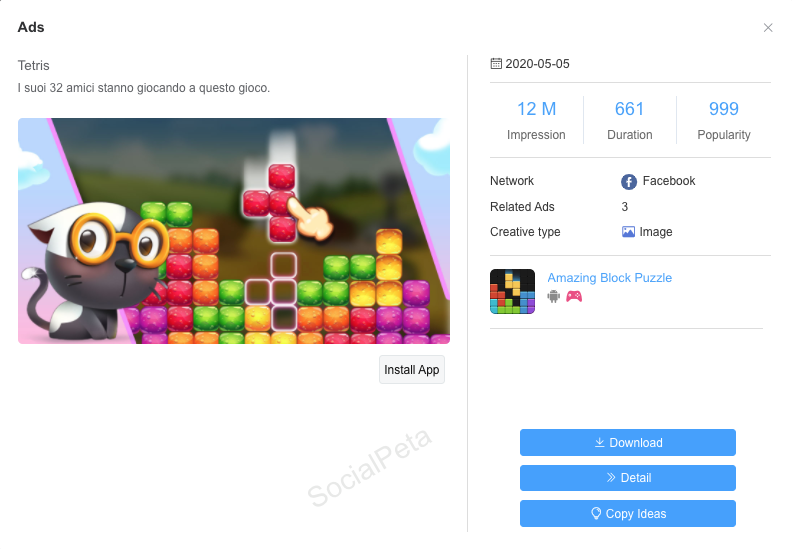
For Amazing Block Puzzle, the creative places the puzzle board at the center of the advertisement and combines it with highly saturated blocks and a cute animated character. The article argued that this colorful presentation helped make the gameplay itself the visual focus.
Miraculous Ladybug & Cat Noir
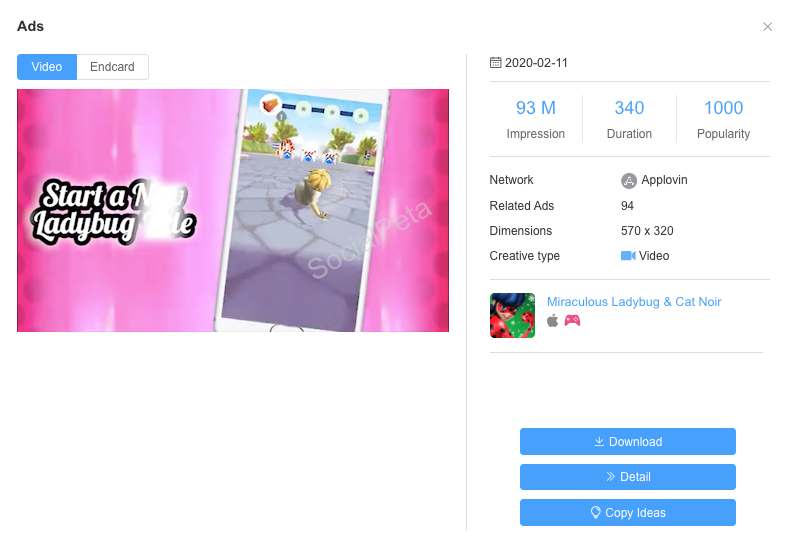
The Miraculous Ladybug & Cat Noir example uses a bright pink background around the gameplay footage. In the original analysis, the contrast was presented as a way to separate the game screen from the surrounding creative and keep viewers focused on the action.
3. Vertical Ads Are Easier to Adapt to Mobile Viewing
The original article observed that vertical-screen creatives were increasingly common among popular casual game advertisers in 2020. This reflected the growth of mobile-first short-form video and the fact that users could watch portrait creatives without rotating their phones.
The article argued that vertical formats could create a more immersive mobile viewing experience because the creative naturally occupies more of the phone screen. It also cited a 3.16× increase in display area compared with a horizontal presentation. That figure is preserved here as part of the original historical analysis rather than presented as a current advertising benchmark.
Cooking Fever was used as the example. Although the game itself could be played horizontally, its advertising strategy included portrait-oriented creatives designed for mobile placements.
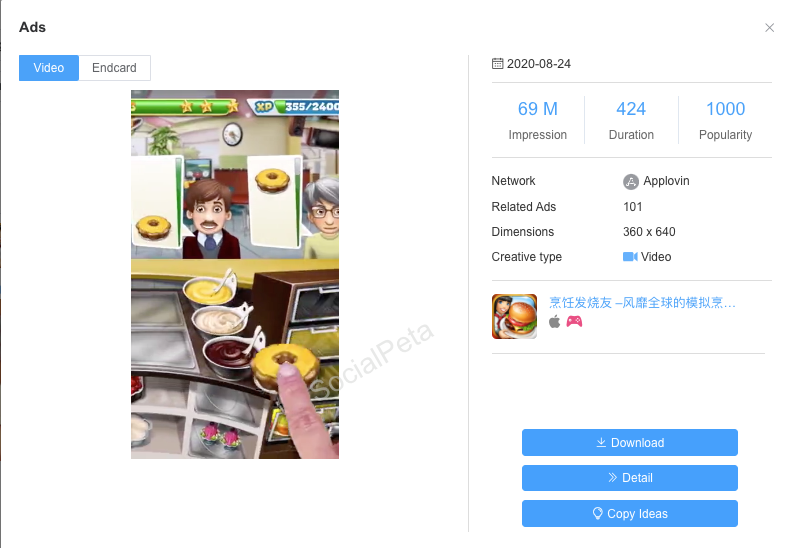
SocialPeta's 2020 analysis concluded that portrait creatives had become an increasingly important format for casual game advertisers, particularly as mobile video consumption shifted toward vertical viewing.
4. Combine Playable Ads and Video Ads
Playable ads held a prominent position in casual game advertising. The article noted that many popular casual games used both playable creatives and conventional video ads rather than relying on only one format.
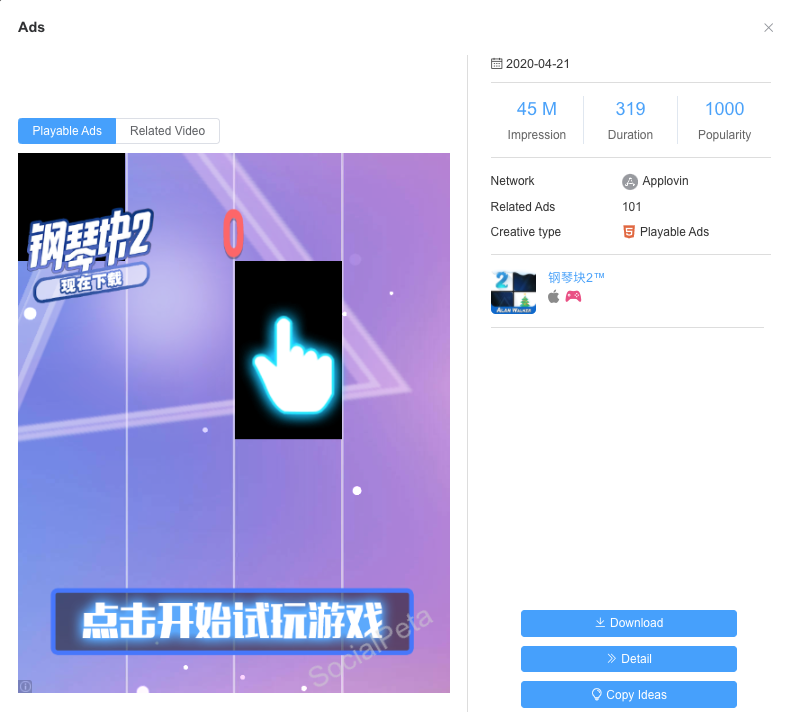
One advantage of playable advertising is that users can experience an approximation of the game's core mechanic before installing it. The article described playable creatives using 2D, 3D, interactive video, and panoramic techniques to demonstrate gameplay, visual style, controls, and story context.
This makes it possible for users to understand the basic mechanism of a game within a short period of time. Video ads can then supplement the interactive creative by explaining the experience more clearly or showing additional gameplay.
In the original analysis, combining playable and video formats was presented as a way to provide a more intuitive preview of the product while balancing the risks of putting the full advertising budget behind a single creative type.
5. Use Live-Action Video Advertising Commentary
After live-action advertising became common in adventure and role-playing game promotion, the original article observed similar ideas appearing in casual game campaigns. These creatives combined gameplay with presenters, creators, or commentary.
SocialPeta highlighted Gacha Life as an example. According to the original 2020 article, the game used YouTube creators for promotion, allowing audiences to learn about the game through personalities they already followed.

The article viewed this format as serving two purposes: creator visibility could help attract initial attention, while spoken or live-action commentary could make the game easier for viewers to understand.
6. Understand the Audience's Psychology
The final creative principle in the article was to understand what motivates viewers to keep watching or interacting with a game ad. Rather than only showing polished gameplay, advertisers could build creatives around curiosity, tension, frustration, completion, or the desire to solve a simple problem.
Tangle Master 3D was used as the main example. At the time of the original analysis, the game had been advertised for less than 90 days but had already reached the top of the App Store free-games ranking described by the article.
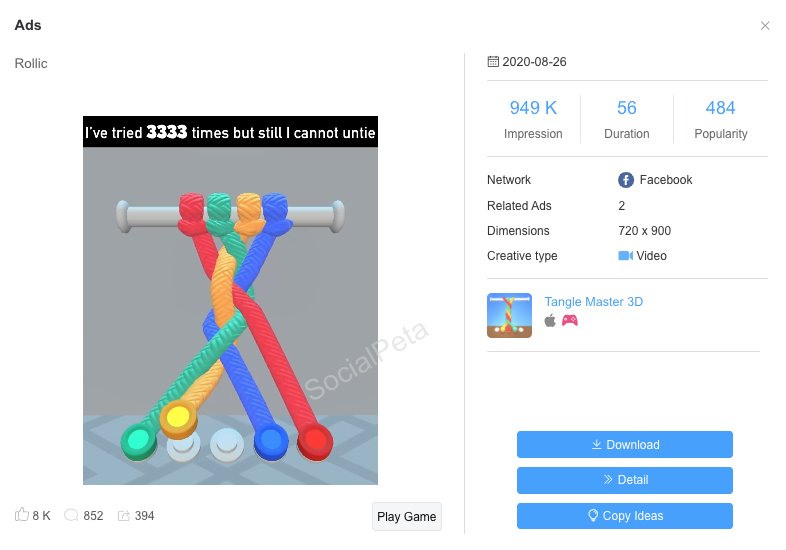
SocialPeta selected one of the game's most-viewed creatives for closer analysis. The screenshot records a 56-day duration for the advertisement. The creative shows four colored ropes tied together and challenges viewers with a deliberately frustrating untangling problem.
The article observed that similar gameplay-based creatives appeared across the game's other advertising placements. Rather than relying on complicated storytelling, the ads used an immediately understandable task and the viewer's desire to see the problem solved.
More broadly, the original article argued that many casual game ads followed the same principle: simple operations, low-friction gameplay, and satisfying problem-solving could be translated into advertising concepts that were easy to understand within seconds.
Conclusion
SocialPeta's 2020 analysis identified several recurring characteristics among popular casual game advertising creatives: concise copy, emoji, strong colors, vertical video, playable experiences, live-action commentary, and psychology-driven gameplay hooks.
The central lesson of the original article was not that every advertiser should copy the same execution. Instead, reviewing successful creative patterns can help a team understand what audiences respond to, develop better hypotheses for new assets, and avoid spending budget blindly on ideas that have not been evaluated.
For casual game advertisers, studying competitors and popular creative formats can provide useful inspiration when deciding how to allocate creative production and advertising resources.