
WhatRunsWhere vs SocialPeta: Which Is the More Powerful Ad Intelligence Tool?
A historical comparison of WhatRunsWhere and SocialPeta across advertising data coverage, creative research, competitor tracking, ad analysis, cost intelligence, and pricing.
WhatRunsWhere vs SocialPeta Overview
As the Internet developed, digital marketing became one of the main ways for companies to attract traffic and reach users through electronic devices such as mobile phones and computers. Advertising plays a central role in digital promotion, and advertisers often need to test campaigns continuously to identify the approaches that perform best.
Monitoring competitors can help reduce unnecessary testing and reveal which campaigns, creatives, and channels appear to be working for other advertisers. Ad intelligence tools are designed to make this research easier by collecting and organizing information about competitors' advertising activity.
Access to competitor advertising intelligence can help marketers reduce the initial cost of experimentation and avoid spending time and budget on ineffective approaches. This article compares WhatRunsWhere and SocialPeta as they were presented in 2020, focusing on data coverage, ad research, competitive analysis, and pricing.
WhatRunsWhere
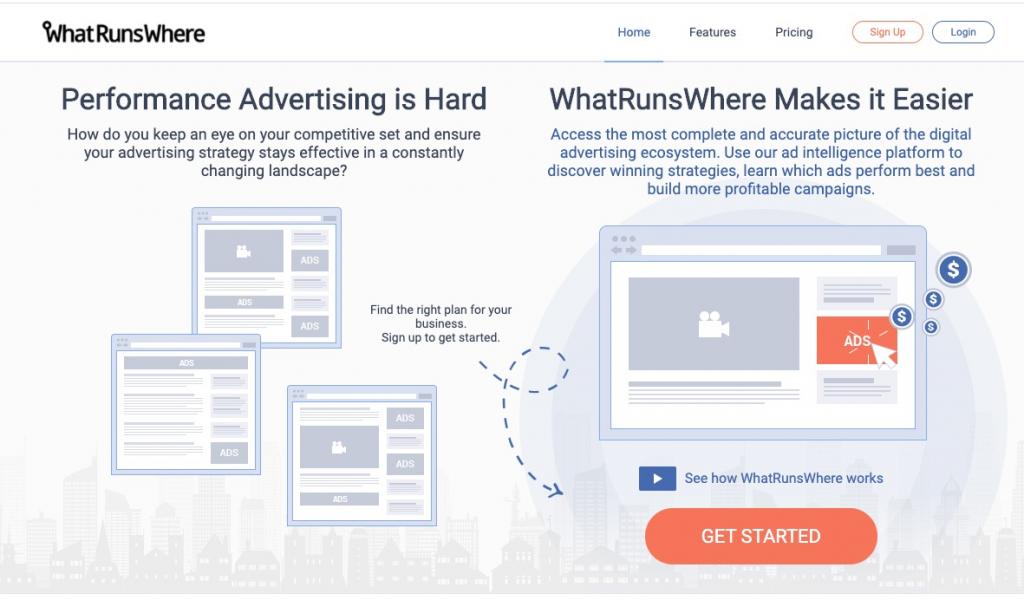
WhatRunsWhere was presented in the original article as a California-based competitive advertising intelligence tool focused on helping marketers understand where competitors advertise and what kinds of ads they use.
Its research workflow was designed to help users discover which advertisers and advertisements appeared on particular domains, which ads were associated with specific keywords, and where competitors were running campaigns.
The platform also provided competitive insights intended to help advertisers identify strong-performing creatives, understand competitors' advertising activity, and use those findings when developing their own campaigns.
Comparison of Ad Data Dimensions
Advertising intelligence platforms depend heavily on the breadth, depth, and freshness of the data they collect. Comparing the data dimensions described by each platform in 2020 provides an initial view of how their research coverage differed at the time.
WhatRunsWhere Data Coverage
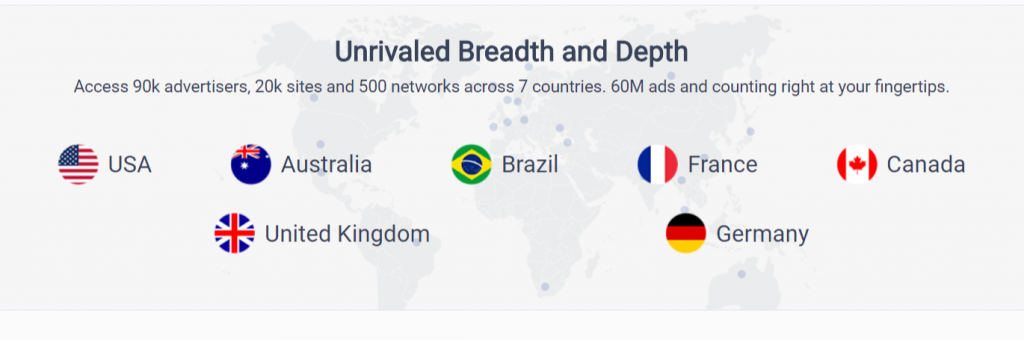
According to the original comparison, WhatRunsWhere supported seven countries:
- United States
- United Kingdom
- Canada
- Australia
- Brazil
- France
- Germany
The article also stated that WhatRunsWhere monitored approximately 120,000 web and mobile publishers and 95,000 Android application publishers.
SocialPeta Data Coverage
The 2020 article stated that SocialPeta supported 45 countries, spanning markets in Europe, South America, Southeast Asia, the CIS, Japan and Korea, North America, the Middle East, and Africa.
It also stated that SocialPeta monitored 73 major online advertising platforms, including major social platforms and advertising channels commonly used across different markets.
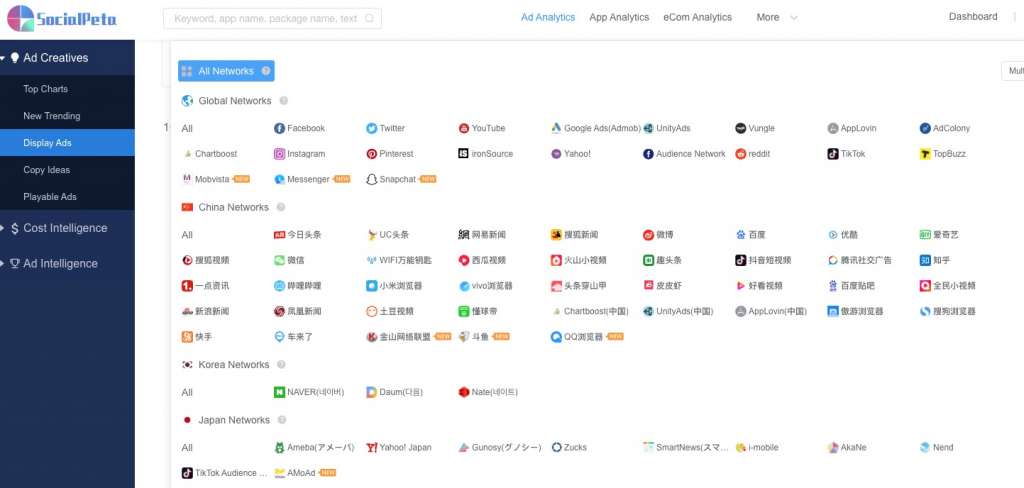
At the time of publication, the article reported that SocialPeta had crawled more than 1 billion ads and analyzed approximately 3 million advertisers and ad publishers. Advertiser pages could be opened for more detailed analysis, and users could subscribe to competitors to receive regular advertising intelligence updates.
Data Dimension Analysis
Based on the dimensions presented in the original article, SocialPeta was positioned as having broader geographic and channel coverage. The article argued that WhatRunsWhere's data collection was stronger in a smaller group of developed markets, while SocialPeta covered a wider range of markets and supported deeper analysis of advertising and market activity.
Comparison of Main Functions
WhatRunsWhere
WhatRunsWhere allowed users to search for advertisers, websites, networks, and categories. The original article also highlighted affiliate marketing filters and the ability to track particular advertisers, sites, and networks.
1. Advertising Creative Search
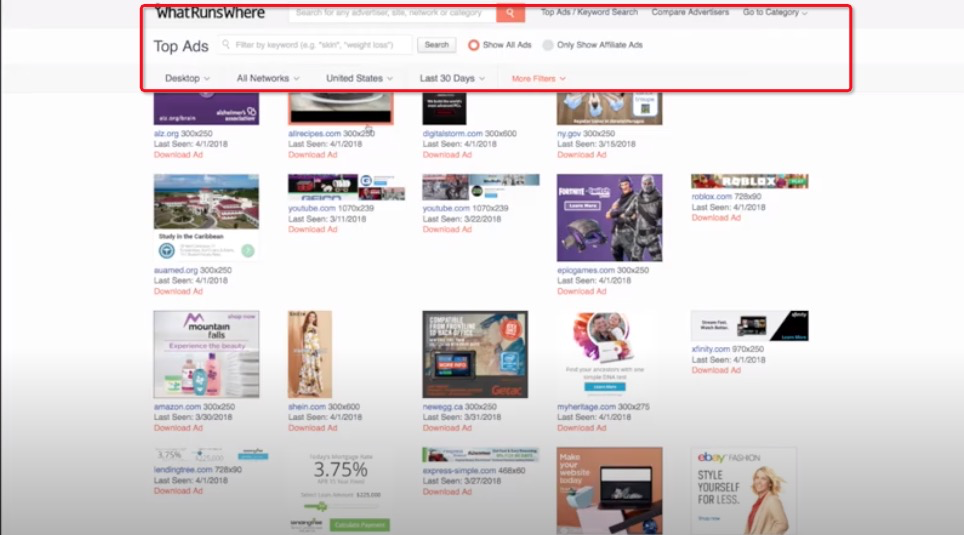
WhatRunsWhere provided search and filtering tools designed to help marketers find advertising creatives relevant to their competitive research. The article highlighted five general filtering dimensions:
- Networks
- Desktop
- Country
- Time
- Additional filters
2. Ad Analysis
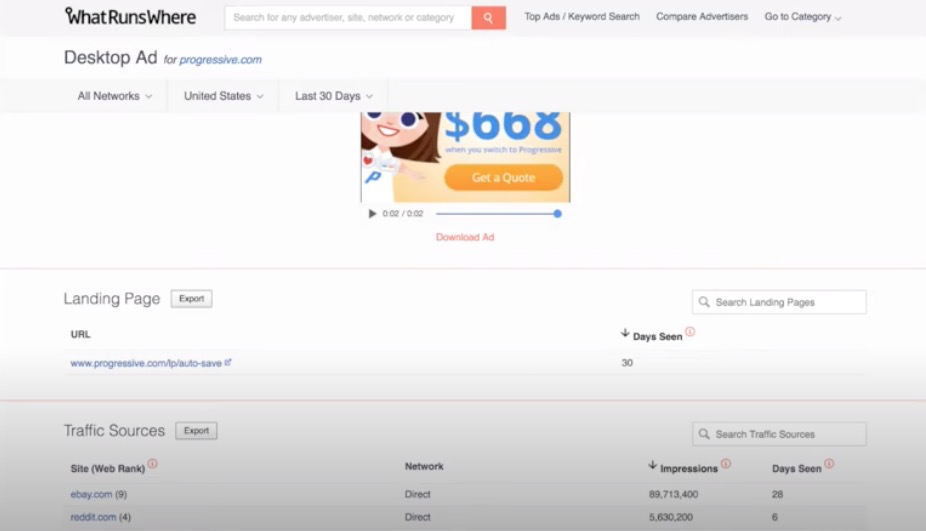
After finding a competitor's ad, users could open the creative for more detailed analysis. According to the article, the interface could display the creative itself and allow the ad to be downloaded.
The analysis could also show the country where the ad appeared, the related landing-page URL, how long the landing page had been observed, traffic sources, and information about exposure activity across different sources and time periods.
3. Affiliate Ad Research
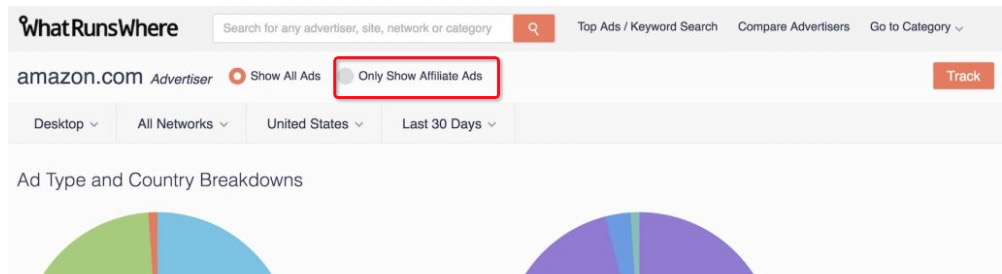
WhatRunsWhere provided a dedicated affiliate-ad filter for competitor research. By selecting the option to show only affiliate ads, users could narrow creative results to affiliate campaigns and inspect the related advertising analysis.
4. Discover Competitors' Advertising Strategies
The article described five questions that WhatRunsWhere could help marketers investigate:
- Which channels are competitors advertising on?
- Which ads are competitors running?
- Which ads are popular in a particular country?
- Which advertising messages are competitors using around specific keywords?
- How are competitors' ads changing over time?
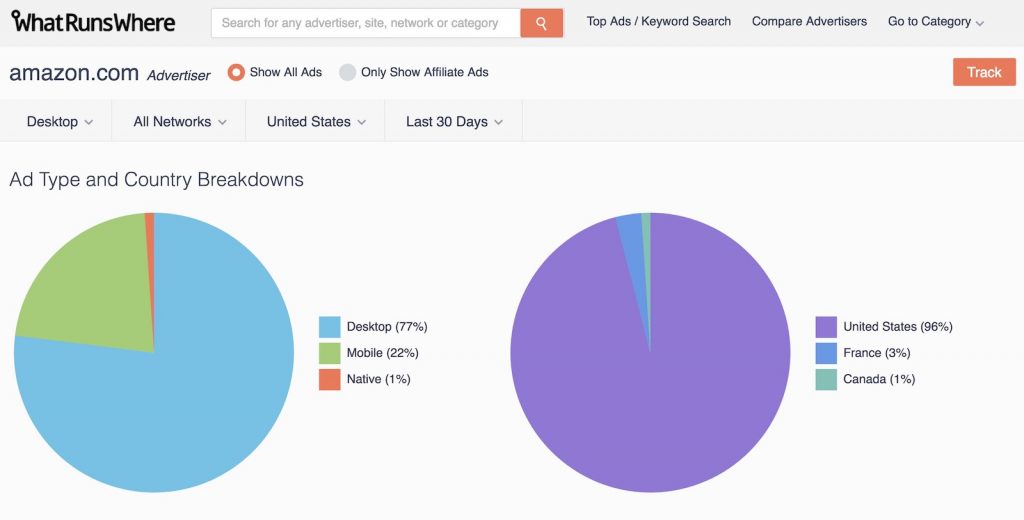
Domain-based research could be used to search for a competitor and review its popular campaigns. This could help answer where a competitor was advertising, which countries it was targeting, and what kinds of creatives it was using.
The same workflow could also support new-market research by helping marketers examine major advertisers in a category, the channels they used, and the messages appearing in their campaigns.
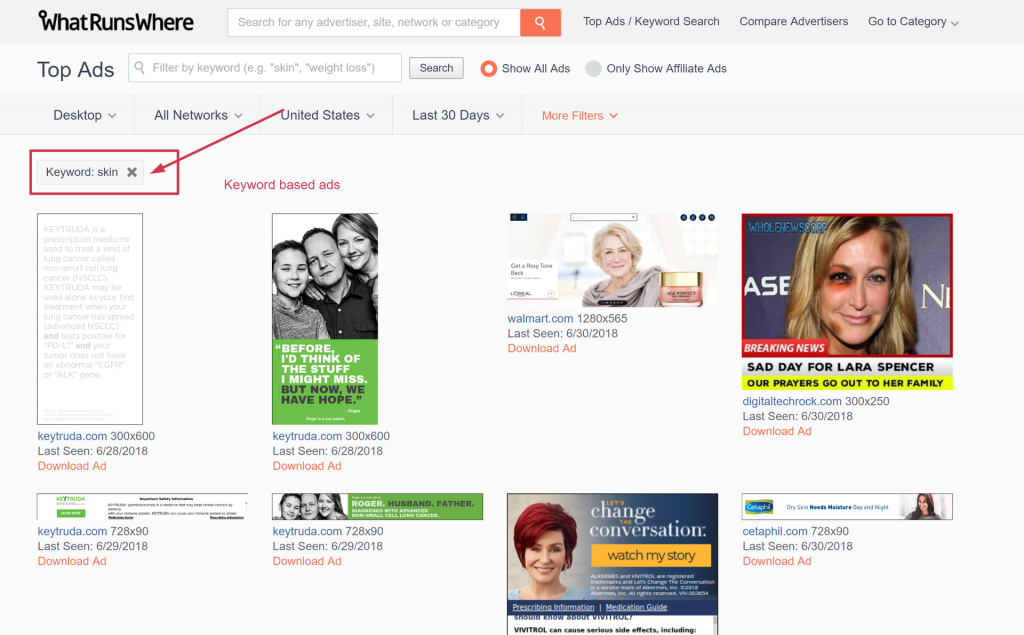
Keyword search was useful for researching advertising around specific topics and identifying active advertisers in a market. The article also noted that these results could be used for inspiration around banner design and advertising messages.
For deeper monitoring of an individual competitor, users could add an advertiser's domain to a tracking list and follow its latest observed advertising activity.
SocialPeta
The original article grouped SocialPeta's advertising workflow into three major areas: advertising creative research, cost intelligence, and ad intelligence. It described the platform as supporting keyword-based creative discovery along with multi-dimensional analysis across channels, audiences, creatives, and other advertising attributes.
For the current SocialPeta product offering, see the SocialPeta Ad Intelligence platform.
1. Advertising Creative Analysis
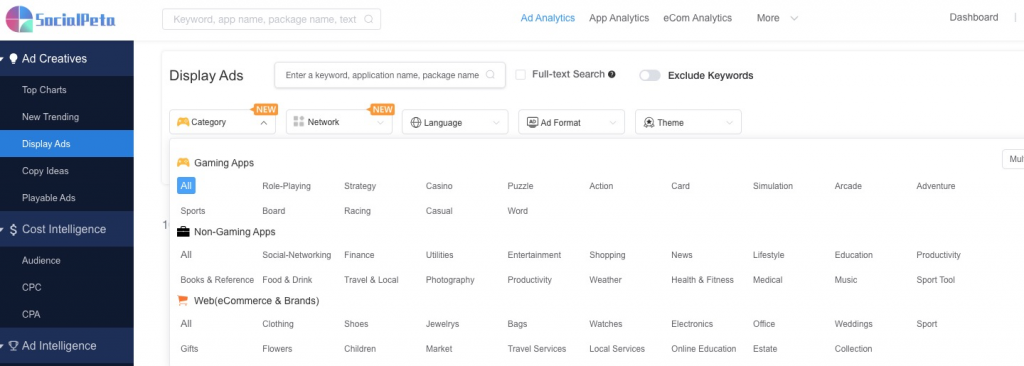
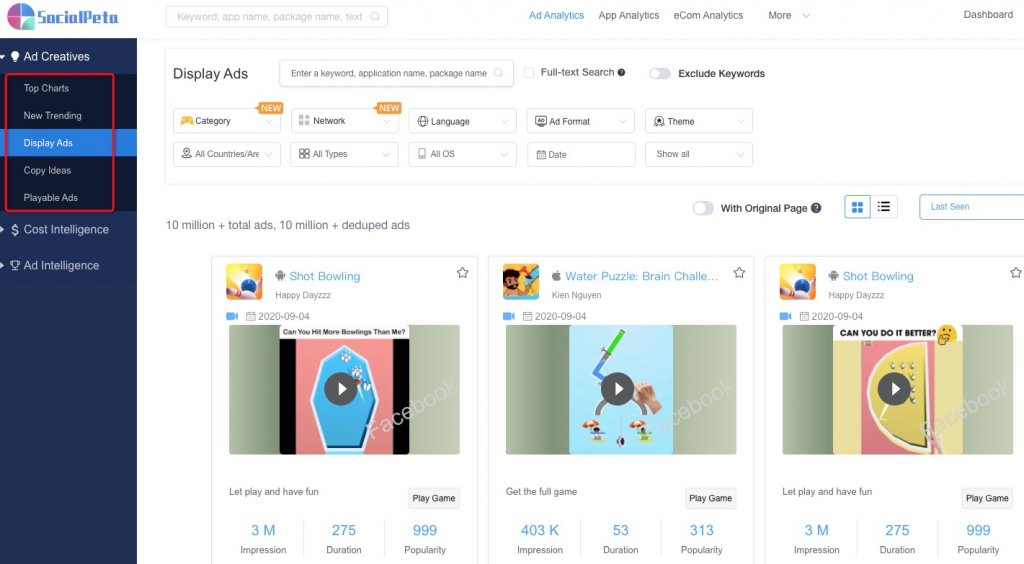
In the 2020 version of SocialPeta, the advertising creative area was described as containing five sections:
- Top Charts
- New Trending
- Display Ads
- Copy Ideas
- Playable Ads
These sections were used to identify strong-performing ads, monitor emerging creative trends, search advertising materials, research ad copy, and inspect playable game ads.
The article stated that the Display Ads interface covered advertising creatives collected from the platform's monitored channels and countries. Users could search with keywords and narrow results using dimensions such as country, category, network, language, ad format, operating system, and date.
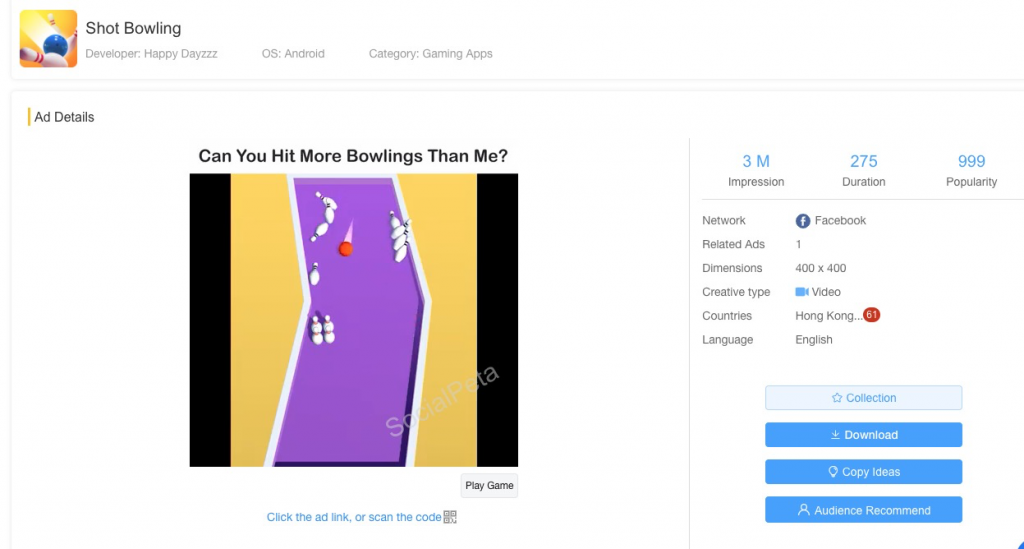
Opening an individual ad exposed a more detailed creative analysis, including information about the ad, its network, format, country, and observed advertising activity.
2. Ad Cost Analysis
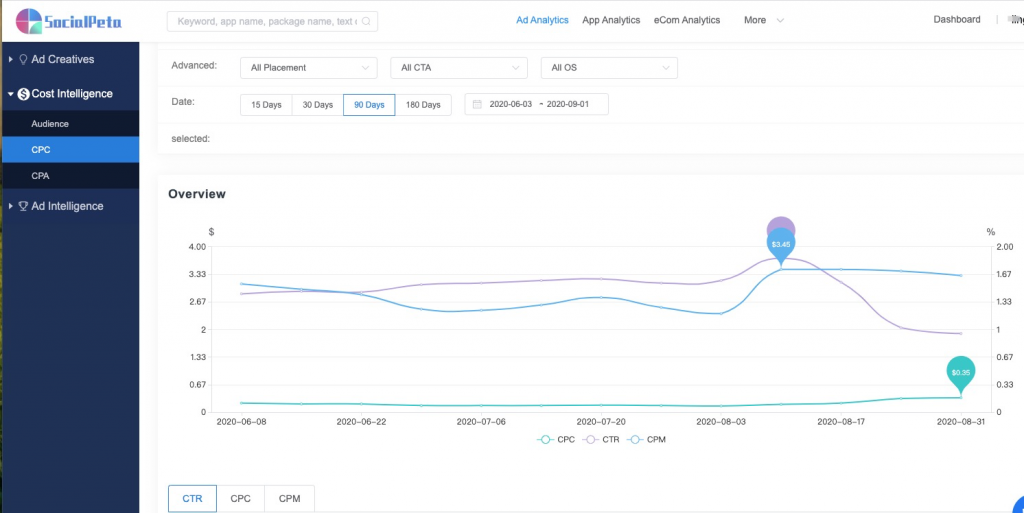
The legacy article described three areas for researching changes in advertising cost:
- Audience
- CPC
- CPA
Advertising cost data is usually not directly disclosed by advertisers. The article stated that SocialPeta modeled cost trends from advertising data and presented them as curves for research.
At that time, the article described Facebook, Instagram, Audience Network, and Messenger as supported channels for this cost research and stated that users could examine CTR, CPC, and CPA ranges and trends over a 180-day window.
It also described comparisons of advertising bids across countries and audience groups, intended to help marketers understand potential differences in user-acquisition costs.
3. Ad Intelligence Analysis
The 2020 article divided SocialPeta's ad intelligence area into five functions:
- Top Charts: rankings of advertisers.
- New Trending: advertisers showing recent growth or activity.
- Advertiser Analysis: analysis of advertiser performance.
- Ad Publisher Analysis: research into advertising within apps and publisher environments.
- Ad Platform Analytics: research into advertising platforms.
Advertiser Analysis
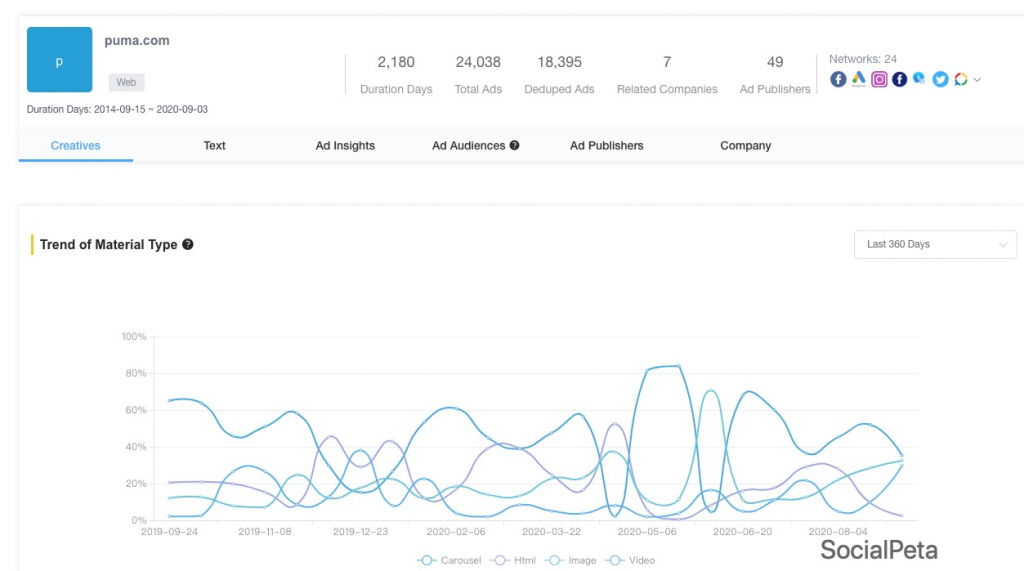
Users could enter the name of a competitor's app or website and review its advertising activity. The original article used Puma as an example and reported that the observed advertiser history ran from September 15, 2014 through the time of the 2020 analysis, with activity across 24 channels and 24,038 total ads.
Beyond basic advertising activity, the article described additional views for audience, creative, and copy analysis.
Ad Platform Analysis
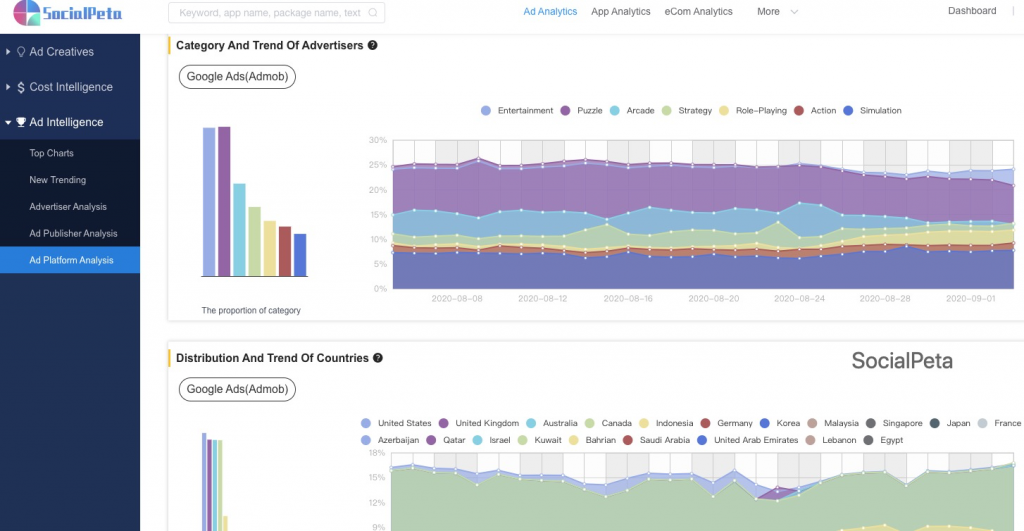
For companies evaluating a new advertising platform, the article described SocialPeta's Ad Platform Analysis as a way to study the countries, categories, and ad exposure associated with a particular channel and to review advertisers performing on that platform.
The original article also highlighted Ad Publisher Analysis and Top Charts as additional competitive advertising research features.
Main Function Comparison
The original SocialPeta comparison concluded that SocialPeta provided a broader set of intelligence functions at the time. It characterized WhatRunsWhere primarily as a tool for researching individual competitors' advertising data and campaign performance.
SocialPeta, by comparison, was positioned as supporting competitor research alongside broader market analysis, advertising-cost research, audience insights, and analysis of advertising channels and market opportunities.
2020 Price Comparison
The following prices are preserved from the September 2020 article for historical accuracy. They should not be treated as current pricing.
| Platform | Pricing stated in the 2020 article |
|---|---|
| WhatRunsWhere |
|
| SocialPeta | The article stated that SocialPeta primarily served medium and large customers and that advertising intelligence service pricing started at US$5,000 per year, with specific quotations available by contacting the company. |
Which Ad Intelligence Tool Is More Powerful?
Based on the data coverage and product functions described in the original 2020 comparison, the article concluded that SocialPeta offered broader data capture and advertising intelligence analysis.
WhatRunsWhere was presented as a focused tool for understanding competitors' placements, creatives, domains, keywords, traffic sources, and affiliate advertising activity. SocialPeta was presented as extending competitive research into broader advertising, cost, audience, advertiser, publisher, and platform analysis.
For marketers evaluating either platform today, current product functionality, coverage, and commercial terms should be checked directly rather than relying on this historical comparison.
SocialPeta
The original article described SocialPeta as an advertising analysis and intelligence platform founded in 2015. At the time, SocialPeta combined a large advertising database with search, monitoring, and analysis capabilities across advertising, marketing, cost, app, audience, e-commerce, and brand intelligence.
SocialPeta initially focused heavily on game advertising intelligence before broadening its coverage. By the time this comparison was published, the article positioned SocialPeta as a platform serving both game advertising research and e-commerce advertising intelligence.