
App Promotion Strategy: An Evidence-Led Playbook for Mobile Growth
A practical app promotion plan should connect market selection, competitor research, creative testing, store conversion, paid and organic channels, and post-install value. This playbook shows how to make those decisions as one learning system.
What app promotion means
App promotion is the coordinated work used to help the right people discover, install, activate, and return to a mobile app. It can include App Store Optimization, paid user acquisition, content, creators, communities, partnerships, referrals, lifecycle messaging, and product-led distribution.
Promotion is broader than app advertising. An ad may earn a tap, but the store page must convert that interest and the product must deliver the value that was promised. If those pieces are managed as separate projects, a campaign can generate inexpensive installs while producing weak activation, retention, or revenue.
App promotion
The full system across discovery, acquisition, activation, retention, and re-engagement.
User acquisition
The part of promotion focused on bringing new users into the app through measurable channels.
ASO
The store-specific practice of improving discoverability and product-page conversion.
If you need a concise definition and terminology guide, start with the SocialPeta app promotion glossary. This article focuses on the operating decisions: what to research, what to test, and what evidence should unlock the next investment.
Build a promotion system, not a tactics list
Most app promotion advice is organized as a long list: optimize the store page, run ads, post on social media, contact influencers, send email, launch a referral program, and improve retention. Each tactic can be useful, but a list does not tell you which action fits your app, which assumption it tests, or when it deserves more budget.
A stronger strategy treats promotion as a loop. Every channel has a job, every creative expresses a hypothesis, and downstream user quality changes the next market, message, or media decision.
Market
Choose a category, country, platform, and audience where the product has a credible reason to win.
Message
Turn one user problem and one product advantage into a promise that the app can fulfill.
Creative
Translate the promise into distinct hooks, formats, demonstrations, and proof for each channel.
Conversion
Carry the same promise through the landing or store page, install, deep link, and first session.
Value
Use activation, retention, revenue, and payback to decide what to stop, revise, or scale.
The planning rule
Do not add a channel because it appears on a checklist. Add it because it reaches a defined audience, carries a suitable creative format, and produces a signal that helps you make the next decision.
Research the market before you spend
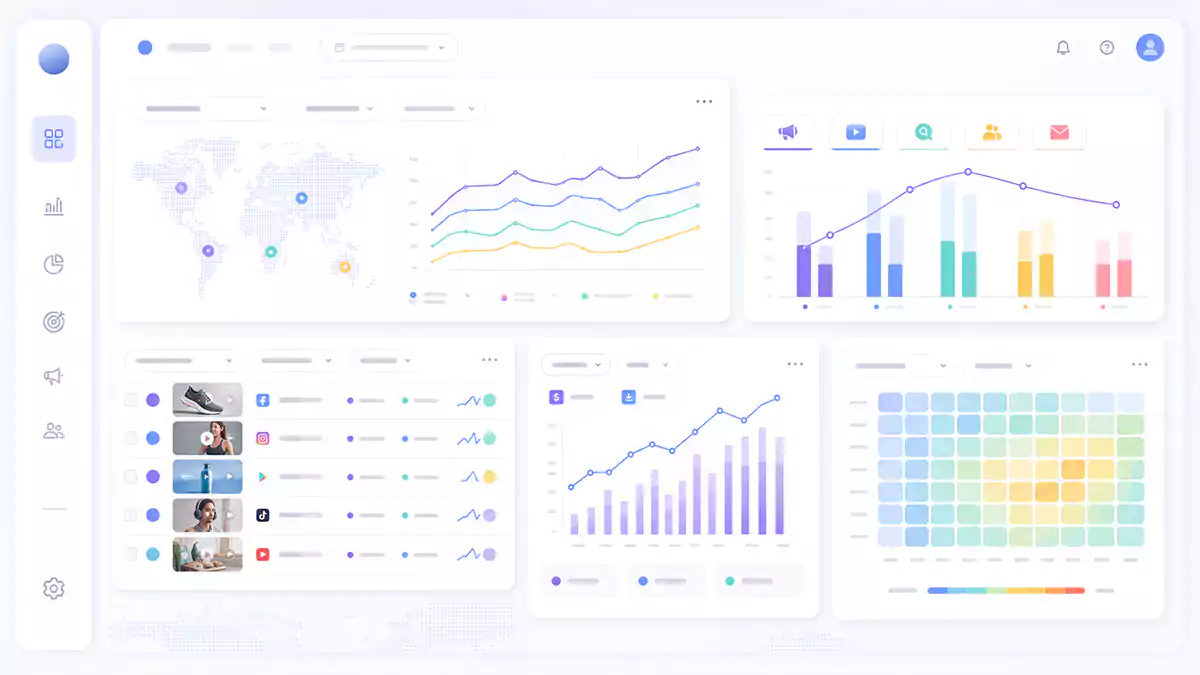
App promotion begins before campaign setup. A team needs to know where demand is visible, which competitors are active, how those competitors position the product, and what creative patterns appear across markets and channels. This is not a request to copy the most visible advertiser. It is a way to replace an empty brief with testable choices.
Market evidence
- Store rankings by country, category, platform, and chart
- Download and revenue direction by month and market
- Country, platform, and media activity around the category
- New releases, fast movers, and emerging adjacent products
Competitive evidence
- Which advertisers are active in the target segment
- Which networks, countries, languages, and formats they use
- Which messages repeat and which creative ideas are rising
- Where competitors leave a positioning or format gap
SocialPeta's App Intelligence can compare App Store and Google Play rankings and investigate download and revenue movement. Its ad intelligence workflow adds advertiser, channel, country, language, material type, and time-range filters. Together, these views help a team separate three questions that are often mixed together: Is the market attractive? Who is competing for attention? What messages and creative formats are being deployed?
For a deeper explanation of the store and market layer, read the mobile app intelligence guide. For advertising research, see the SocialPeta Ad Intelligence product.
Choose app promotion channels by job
The best app promotion channel is the one that fits the current bottleneck. If people cannot discover the app, store and content channels may matter first. If the team needs faster creative learning, paid acquisition can compress the feedback cycle. If installs are healthy but value is weak, more reach may simply make the product or onboarding problem more expensive.
| Channel | Primary job | Best fit | Decision signal |
|---|---|---|---|
| App Store Optimization | Capture existing store intent | Category, competitor, feature, and problem-aware searches | Store-page conversion and qualified organic installs |
| Paid app campaigns | Create demand and accelerate learning | Testing audience-message combinations at useful volume | Cost per activated user, ROAS, and payback |
| Content and SEO | Answer a problem before the store visit | Products with searchable use cases and a longer decision path | Qualified visits, assisted installs, and branded demand |
| Creators and communities | Borrow context, trust, and native distribution | Apps whose value can be demonstrated through a real workflow | Activated-user quality by creator, format, and audience |
| Partnerships and referrals | Reach adjacent audiences through a relevant offer | Apps with clear audience overlap or a collaborative value loop | Incremental activated users and referral retention |
| Lifecycle and re-engagement | Bring users back to unfinished or recurring value | Apps with repeat behaviors, content, subscriptions, or purchases | Return rate, retained revenue, and incremental lift |
Start with one primary learning channel
A small or early-stage team should not split a test across every available platform. Choose one market, one channel, one conversion goal, and a useful range of creative concepts. Hold enough variables still to understand why performance moved. Add another channel only after the first one has produced a reusable message, audience, or conversion insight.
Google's official App campaign guidance makes the same goal distinction at the campaign level: campaigns can optimize for installs, specific in-app actions, or pre-registration. Google also combines supplied text, image, video, and HTML5 assets across Search, Google Play, YouTube, Discover, the Display Network, and other apps. That automation increases the importance of supplying varied, self-contained assets and evaluating the result against the right downstream event. See Google's App campaign best practices and asset guidance.
Connect each campaign to the right store page
Promotion loses efficiency when an ad promises one experience and the store page presents a generic product. The solution is not to stuff every use case into the default listing. Segment the promise: match the audience and creative angle to a store experience that demonstrates the same feature, outcome, or content.
Apple Custom Product Pages
Apple allows up to 70 custom product pages per app. A page can use different screenshots, previews, promotional text, and keywords, can be localized, and has a unique shareable URL. Optional deep links can continue the journey into relevant app content after installation or opening.
Apple's custom product page guideGoogle Play Custom Store Listings
Google Play allows up to 50 custom store listings. They can tailor the app name, icon, descriptions, and graphic assets for audiences such as countries, search keywords, ad traffic, pre-registered users, inactive users, and buyer segments.
Google Play's custom listing guideCreate a message-match matrix
| Audience | Ad promise | Store proof | First value |
|---|---|---|---|
| New category user | Solve one recognizable problem | Screenshots that demonstrate the core workflow | Complete that workflow during onboarding |
| Competitor switcher | Remove a known limitation | Specific differentiator and migration proof | Import or configure without friction |
| High-intent niche | Deliver a specialized outcome | Relevant feature, content, and social proof | Reach the niche outcome immediately |
Build a creative testing system
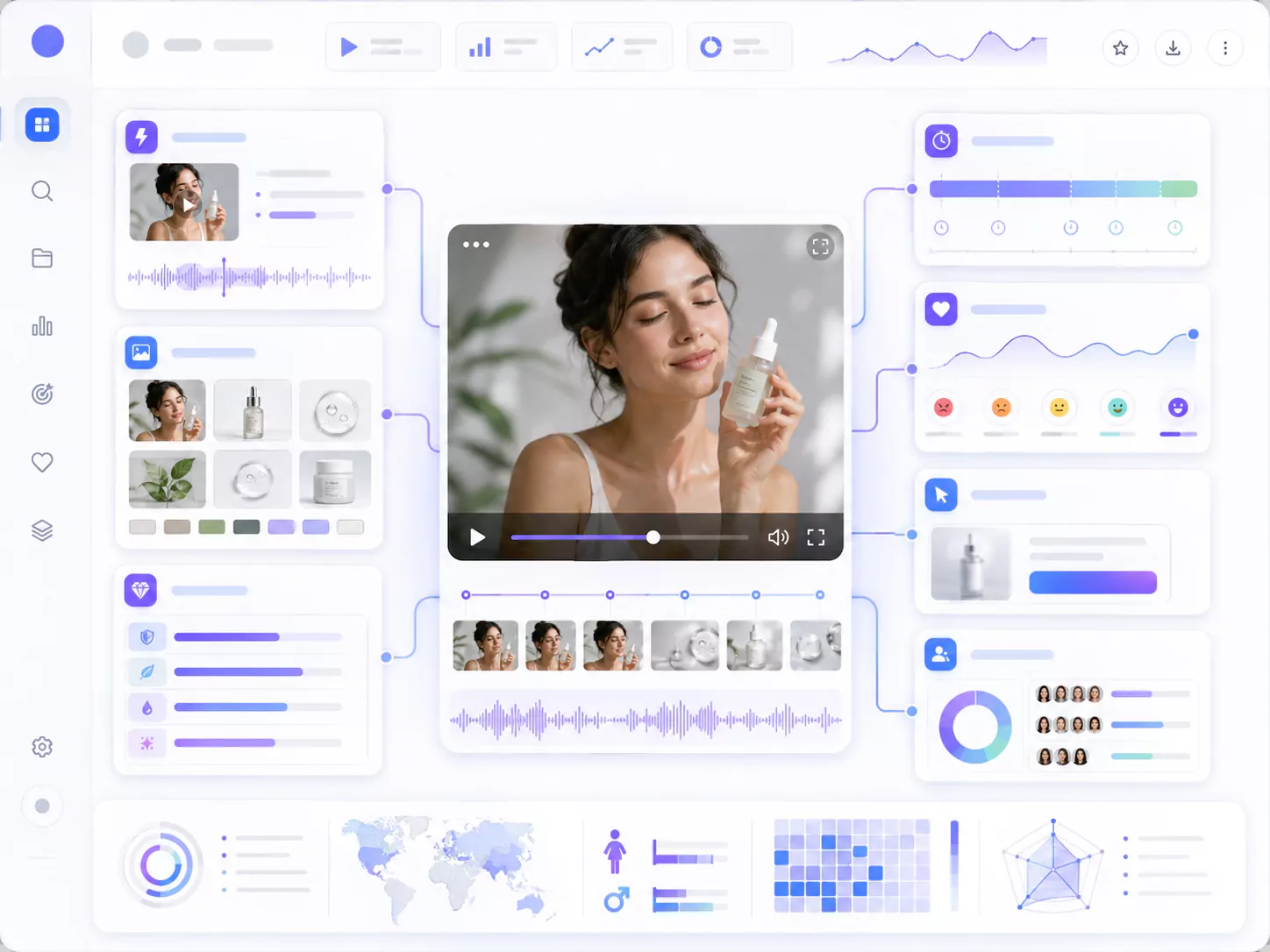
Creative testing should compare ideas, not only cosmetic variants. Changing a button color or trimming the same video does not reveal whether a different audience problem, promise, proof, or format would outperform the original direction.
Use four levels of variation
Angle
Change the user problem or desired outcome: save time, earn status, reduce risk, feel entertained, or connect with others.
Proof
Change how the promise is supported: product demo, before-and-after, creator experience, review theme, result, or comparison.
Format
Change the communication grammar: UGC, screen recording, animation, live action, playable, carousel, static, or narrated demo.
Execution
Change the hook line, opening shot, pacing, duration, aspect ratio, CTA, language, or end card within a proven concept.
Use competitor ads as evidence, not templates
SocialPeta's creative search supports filters such as app type, category, network, country, language, material type, and time range. It also separates popular, fast-rising, and newly discovered creative views. That combination is useful because a single ad is ambiguous: it may be a winner, a short test, a localized derivative, or simply easy to observe. Patterns across advertisers, time, and markets create stronger hypotheses.
Do not infer profitability from visibility.
Public advertising activity can show what a competitor is testing and where it is active. It cannot, by itself, prove that the ad is profitable, that the audience is valuable, or that the same idea will work for a different product. Treat it as research input and validate the hypothesis with your own campaign and cohort data.
Measure value beyond the install
Cost per install is useful for diagnosing media efficiency, but it is not a complete app promotion outcome. A low CPI can hide poor onboarding, weak retention, low purchase intent, fraud, or a message that attracts the wrong audience. Define the first valuable action before launch and connect it to later cohort economics.
| Stage | Decision question | Useful metrics |
|---|---|---|
| Reach | Did the message earn relevant attention? | Impressions, view-through rate, CTR, qualified visits |
| Store conversion | Did the destination fulfill the ad promise? | Product-page views, conversion rate, install rate |
| Activation | Did new users reach first value? | Activation rate, cost per activated user, time to value |
| Retention | Did the acquired cohort keep using the app? | D1/D7/D30 retention, repeat use, churn |
| Economics | Did acquired value justify the cost? | LTV, ARPU, ROAS, contribution margin, payback period |
Cost per activated user
Promotion spend ÷ activated users
ROAS
Attributed revenue ÷ promotion spend
Payback period
Time until cohort contribution repays acquisition cost
Write a decision rule before the campaign starts
Record what must be true to continue, revise, or stop a test. Include the attribution window, conversion delay, minimum useful sample, target event, and known privacy or reporting gaps. Google recommends sending relevant in-app events back to App campaigns and choosing campaign goals around installs or valuable actions. Apple's custom product page analytics can report page views, downloads, conversion, subscription performance, and sales, which helps teams evaluate user value beyond the page conversion itself.
Review the official guidance for maximizing Google App campaigns and Apple custom product page analytics. For the underlying measurement concepts, see our attribution modeling guide.
A practical 30-day app promotion plan
This plan is deliberately narrow. It is designed to produce one reusable learning loop, not a simultaneous launch across every channel.
Week 1
Define the market and measurement
- Choose one country, category, platform, and valuable user action
- Review rankings, download or revenue direction, and active advertisers
- Verify install, activation, purchase or subscription, and revenue events
- Write continue, revise, and stop rules before spending
Week 2
Build the message and conversion path
- Map direct and adjacent competitors
- Extract repeated angles, proof types, formats, and gaps
- Create three genuinely different creative concepts
- Match each concept to a relevant store page and first-session promise
Week 3
Run a bounded test
- Use one primary paid or organic learning channel
- Keep audience, bid goal, and destination consistent where possible
- Check delivery and event quality before interpreting performance
- Document observations without declaring an early winner
Week 4
Read the cohort and choose the next test
- Compare creative by activation and value, not only CTR or CPI
- Identify the largest funnel loss and the variable most likely to affect it
- Save evidence, retire weak concepts, and expand the strongest message
- Add a market or channel only when the first loop supports the decision
Common app promotion mistakes
Buying traffic before fixing message match
If the ad, store page, and onboarding express different promises, additional spend increases the cost of learning without resolving the conversion break.
Copying a competitor's visible ad
You cannot see the competitor's margins, cohort quality, targeting, or test status from the creative alone. Research patterns, then create a hypothesis that fits your own product.
Testing executions instead of ideas
Minor visual changes may optimize a concept, but they rarely discover a new audience problem, promise, proof, or format.
Calling the cheapest install the winner
A low CPI is not a useful win when activation, retention, revenue, or payback deteriorates. Compare cohorts at the value event that matters to the business.
Launching too many channels at once
Fragmented budgets and overlapping variables make it difficult to explain performance. Start with a bounded learning channel, then expand deliberately.
Using deceptive promotion
Google Play prohibits misleading ads, forced installs, redirects without informed user action, and other deceptive or harmful tactics. App developers remain responsible for the networks and affiliates promoting their apps.
Review the full Google Play app promotion policy before working with an ad network, affiliate, or incentive partner.
App promotion FAQ
What is app promotion?
App promotion is the coordinated use of app-store, paid, owned, earned, partner, and product channels to help the right people discover, install, activate, and return to an app. It includes more than advertising because store conversion, onboarding, retention, and measurement all affect whether promotion creates valuable users.
What is the best way to promote a mobile app?
There is no universal best channel. Start by defining one audience, one valuable in-app action, and one market. Research competing apps and ads, align the ad promise with the store page, then run a bounded test. Scale only when activation, retention, revenue, or another downstream value metric remains healthy.
How can I promote an app with a small budget?
Use a narrow launch market, improve the store listing before buying traffic, create content around a specific user problem, work with relevant communities or creators, and reuse competitor research to build a focused creative test. A small budget should buy a clear learning result rather than fragmented reach across many channels.
Which metrics should an app promotion campaign track?
Track the full path from impression and store-page visit to install, activation, retention, purchase or subscription, and payback. CPI can describe acquisition cost, but it should be read beside cost per activated user, cohort retention, lifetime value, ROAS, and payback period.
How does competitive ad research improve app promotion?
Competitive research helps a team see which markets, channels, formats, messages, and creative patterns are already being tested. It is most useful for forming hypotheses and identifying gaps. It should not be used to copy a single ad or assume that visible activity proves profitability.
A five-step competitive research workflow for app promotion
The following workflow connects SocialPeta's app, advertiser, creative, ranking, market, and saved-inspiration capabilities into one promotion brief. Each step should produce a decision, not just more screenshots.
Validate the market
Compare App Store and Google Play rankings by country, category, and chart type. Add download and revenue movement so you do not confuse visibility with monetization.
Build a competitor set
Search advertisers by keyword, channel, primary market, platform, OS, developer region, and other relevant dimensions. Keep direct competitors separate from adjacent apps that compete for the same attention or use case.
Map active creative patterns
Filter ads by category, network, country, language, material type, and time range. Compare new, popular, and fast-rising creative instead of treating one visible ad as the market standard.
Turn patterns into testable hypotheses
Record the audience, problem, hook, proof, format, CTA, and store-page promise behind each pattern. Choose what to adapt, what to challenge, and what gap your app can own.
Save, launch, and monitor
Organize useful ads into groups and tags, launch a bounded test, and revisit competitors and rankings on a fixed cadence. The purpose is to improve the next decision, not to collect an endless swipe file.
Output 1: market choice
One category-country-platform combination with a documented opportunity and risk.
Output 2: competitor map
A direct and adjacent competitor set with channel, market, message, and creative observations.
Output 3: test matrix
Distinct audience, angle, proof, format, store-page, and success-metric combinations.
The research layer can continue in SocialPeta's Market Intelligence and Creative Analysis products. The goal is not to replace first-party analytics. It is to give your first-party test a better starting hypothesis.